Best Sealer · Florida · Edition No. 01
The Best Paver Sealer for Florida: A Field-Tested Buyer’s Guide
Short answer: In Florida, the best paver sealer is a professional water-based sealer — breathable enough to handle the moisture that’s always moving through pavers here, and stable under the state’s extreme UV. That’s why Kingdom Elite seals with Ure-Seal H2O, applied in two coats and rain-safe about 2 hours after application. Solvent-based sealers can look great in a dry climate, but Florida’s humidity and daily summer storms are exactly where they tend to trap moisture and turn hazy white.
The name tells you what carries the protective resin onto your pavers — water or a chemical solvent. In Florida’s climate, that single choice is the difference between a sealer that lasts and one that clouds over.
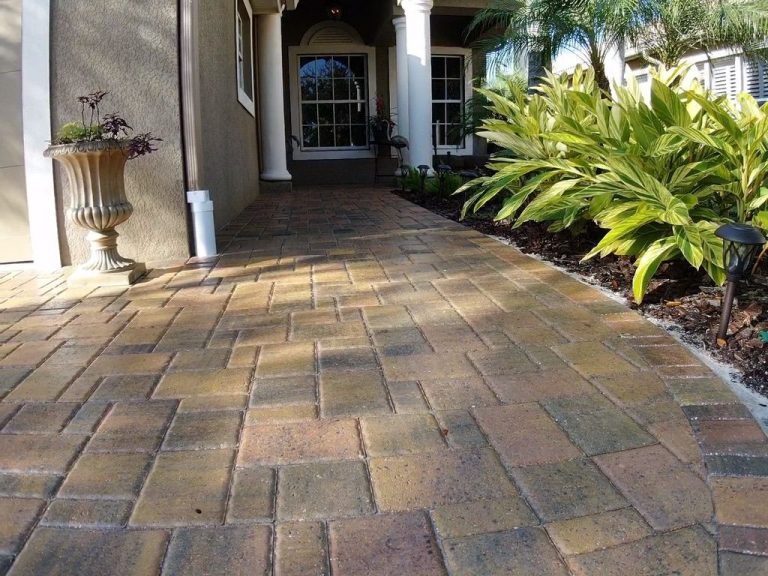
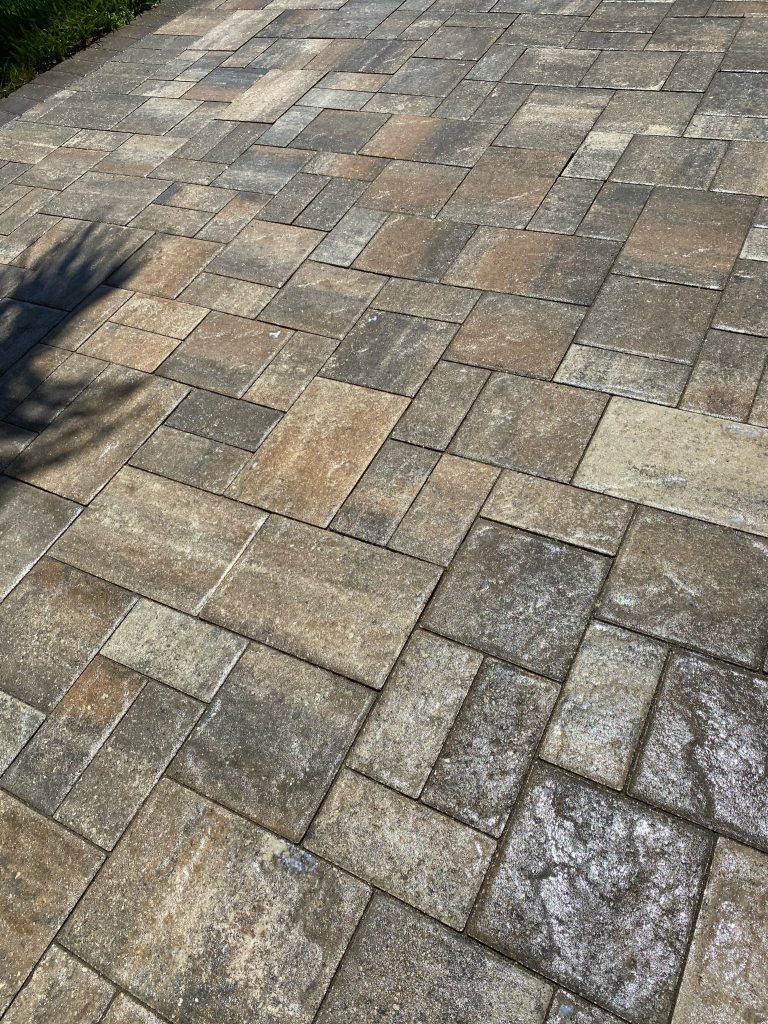
Every paver sealer type at a glance
Five sealer families cover everything sold for Florida pavers. Chemistry first, look second — here’s how each behaves in this climate and what it’s best for:
| Sealer type | Finish | Breathability | Best for in Florida |
|---|---|---|---|
| Water-based urethane (film-forming) | Satin to wet-look gloss | High — vapor escapes | The Florida standard — brick pavers, driveways, pool decks (our pick: Ure-Seal H2O) |
| Water-based acrylic | Matte to satin | Good | Budget resealing where a softer, shorter-lived film is acceptable |
| Solvent-based acrylic | High-gloss wet look | Low — traps moisture | Drier climates — in Florida it’s the #1 source of the white haze we strip |
| Penetrating (silane/siloxane) | Invisible — no sheen, no color change | Highest | Travertine, marble & natural stone; anywhere you want zero look change |
| Color-enhancing penetrating | Deepens color, no film | High | Faded stone you want richer without gloss |
Want the full breakdown of all five families — chemistry, lifespan, and where each fails? Read the types of paver sealer, explained.
Water-based vs. solvent-based: what’s the actual difference?
Once the carrier evaporates, the resin stays behind as the protective layer. The carrier choice changes how the sealer behaves in Florida:
| Water-based | Solvent-based | |
|---|---|---|
| Moisture handling | Breathable — vapor moving up through pavers can escape | Denser film — more prone to trapping moisture underneath |
| Humidity risk | Tolerates Florida’s humid application windows well | Trapped moisture shows up as white haze (“blushing”) |
| Fumes / VOCs | Low odor, low VOC — safe around lanais, pets, pools | Strong fumes and high VOCs during application |
| Recoat behavior | Recoats cleanly on the normal reseal cycle | Old solvent films often need stripping before recoating |
| Florida verdict | The right tool for this climate | Better suited to drier climates |
The moisture line is the one that decides it. Florida pavers are almost never truly dry all the way through — roughly 45–50 inches of rain a year, year-round humidity, sprinklers, and pool splash keep moisture cycling through the surface. A sealer here has to let that vapor out. When a dense film can’t, the escaping moisture clouds it from below — and that milky white haze is one of the most common failures we’re called to fix (stripping a failed sealer runs $1.25/sq ft and can take up to 2 days before resealing even starts).
“A sealer in Arizona is fighting one of those. Yours is fighting all three.”
Full deep-dive with the humidity data: water-based vs. solvent-based sealer in Florida’s humidity.
Why does Kingdom Elite use water-based Ure-Seal H2O?
- Breathable protection. Water-based Ure-Seal H2O protects the surface while letting Florida’s ever-present moisture vapor escape instead of trapping it as haze.
- Two coats, every job. A flood coat saturates the surface and joints (helping lock joint sand), then a top coat builds the wear layer that takes the UV and traffic.
- Prep first, always. Sealer only performs on a clean, properly sanded surface — every job runs the 4-step process.
- Built for storm-season scheduling. Rain-safe about 2 hours after application — a genuine advantage when a Tampa afternoon thunderstorm is always in the forecast. Foot traffic in 4–6 hours; keep vehicles off for 48–72 hours.
- Backed in writing. Kingdom Elite’s work with Ure-Seal products carries a 3-year limited warranty covering material-failure defects — cracking, peeling, discoloration — plus a 100% Satisfaction Guarantee.
Matte, satin, or wet look — which gloss level?
Chemistry decides whether a sealer survives Florida; gloss level just decides how it looks. Wet-look gloss is the most requested finish on brick pavers — it deepens color and reads “freshly sealed.” Matte and natural finishes protect identically while keeping the stone’s dry look, and satin splits the difference. Two honest rules from the field: pick the finish you want to live with for the next 2–3 years, and expect gloss to show wear patterns on high-traffic driveways slightly sooner than matte.
Deciding on a finish? Start with wet look vs. matte, compare all paver sealer gloss levels, then decide between color-enhancing and invisible protection — and if you’re worried a sealer will alter your pavers, here’s exactly how sealing changes paver color (and how much).
Solids content: the spec that separates pro sealers from box-store
“Solids” is the percentage of the can that stays on your pavers after the carrier evaporates — the rest is just delivery. Big-box sealers commonly run 10–15% solids; professional two-part urethanes run far higher, which is why one lasts a season and the other lasts years. If you compare products on a single number, make it this one: why box-store sealers fail in Florida — solids content, explained.
What does Florida’s climate actually do to a sealer?
- UV. Summer UV index readings of 10+ break down sealer resins — it’s why unsealed pavers fade chalky-gray and why the sealer, not your paver color, should take that hit.
- Rain. Most of the year’s rain lands as hard June–September afternoon storms that scour the surface and wash out the joint sand a sealer helps hold.
- Humidity and biology. Warm, damp air keeps mold and algae ready to colonize any surface whose protection has thinned — and keeps moisture moving through pavers, which is the whole case for breathability.
Efflorescence. Florida’s constant moisture cycling also pushes mineral salts up through pavers as white, powdery efflorescence — seal over it with a non-breathable film and it’s locked underneath. One more reason breathability and proper prep decide everything here.
Even the right sealer is sacrificial in this climate: plan on resealing every 2–3 years, with a soft wash every 6 months to reach the long end of that range.
Is the “best sealer” the same for every surface?
No — and this is where sealer type matters as much as sealer chemistry. On brick pavers, the standard is Ure-Seal H2O Gloss, the wet-look finish. On newly installed natural stone like travertine, the right call is a penetrating sealer that protects from within and leaves the stone’s natural look. The full decision guide — what each type does, a side-by-side table, and the anti-slip additive for pool decks — is here: Wet-look gloss or penetrating sealer: which is right for your Florida pavers or travertine?
The specs, for the record: Kingdom Elite seals pavers with ICT Ure-Seal H2O — a professional 2-part water-based urethane, low-VOC (under 50 g/L), non-yellowing, ~200–300 sq ft per gallon — and natural stone (travertine, marble, limestone, flagstone) with ICT Stone Show H2O Invisible, a breathable penetrating sealer that protects without changing color. Source: ICT (Innovative Concrete Technology) product data.
Frequently asked questions
Is water-based or solvent-based sealer better for Florida pavers?
Water-based. It’s breathable, so the moisture constantly moving through Florida pavers can escape instead of getting trapped and turning the sealer hazy white — the classic solvent-film failure in humid climates.
What sealer does Kingdom Elite use?
Ure-Seal H2O, a professional water-based sealer, applied as a flood coat plus a top coat on every job — with Ure-Seal H2O Gloss as the standard wet-look finish on pavers.
How soon after sealing can it rain?
Ure-Seal H2O is rain-safe about 2 hours after application. Foot traffic is fine in 4–6 hours; keep vehicles off for 48–72 hours while it fully cures.
What happens if the wrong sealer was used on my pavers?
A failed or hazy sealer usually has to be stripped ($1.25/sq ft, up to 2 days depending on condition) before the surface can be resealed properly. We confirm what’s on your pavers during a free estimate — often from photos.
Sources: ICT Ure-Seal H2O product data (Innovative Concrete Technologies); ICT Stone Show H2O Invisible product data; CMHA Tech Note PAV-TEC-005 (cleaning, sealing & joint-sand stabilization).
Want it done right the first time? Kingdom Elite Services cleans, re-sands and seals pavers across Tampa Bay — see paver sealing in Tampa Bay.