Sealer Types · Florida · Edition No. 01
Wet-Look Gloss or Penetrating Sealer?
Short answer: For brick pavers in Florida, the standard is a wet-look gloss sealer — Kingdom Elite uses Ure-Seal H2O Gloss, a water-based sealer applied as a flood coat plus a top coat. For newly installed natural stone like travertine, the right choice is a penetrating sealer that soaks into the stone and protects from within, without a surface film. Which one you need comes down to two questions: what surface are you sealing, and has it been sealed before?
This guide is part of The Best Paver Sealer for Florida — our complete buyer’s guide to sealer types, gloss levels, and what actually survives this climate.
Two questions decide almost everything about which sealer belongs on your surface: what are you sealing, and has it been sealed before? Get those right and the rest of this guide is detail.
What does a wet-look gloss sealer do?
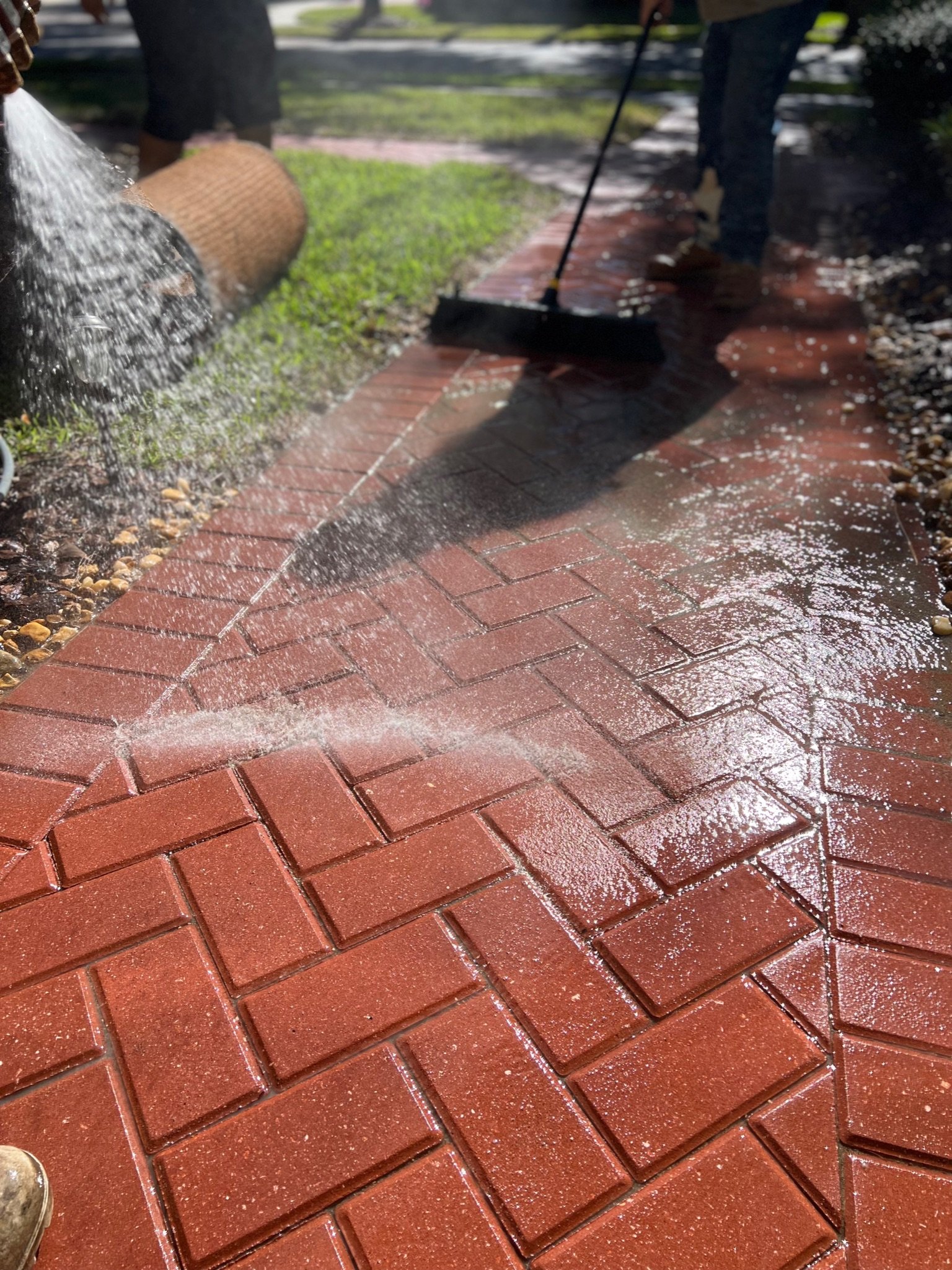
A gloss sealer is a film-forming (topical) sealer: it cures into a clear protective layer on top of the pavers. That layer delivers the two things Florida homeowners ask for most:
- The wet look. Gloss sealer saturates and deepens paver color the way rain does — reds get redder, grays get richer — and holds that depth after the surface dries.
- A sacrificial wear layer. The film takes the abuse — UV, tire scuffing, spilled oil, leaf tannin — so the paver surface underneath doesn’t. Stains sit on or in the sealer instead of soaking into the paver.
- Joint sand stabilization. Sealer applied as a flood coat runs down into the joints and helps lock the sand in place, slowing the wash-out, weeds, and ants that Florida’s storms invite.
Kingdom Elite applies Ure-Seal H2O Gloss in two coats — a flood coat that saturates the surface and joints, then a top coat that builds the wear layer. On Florida’s 2–3 year reseal cycle, a refresh coat restores the look and the protection together.
What does a penetrating sealer do?
A penetrating sealer works the opposite way: instead of forming a film on top, it soaks into the pores of the stone and repels water and stains from within. Three things follow:
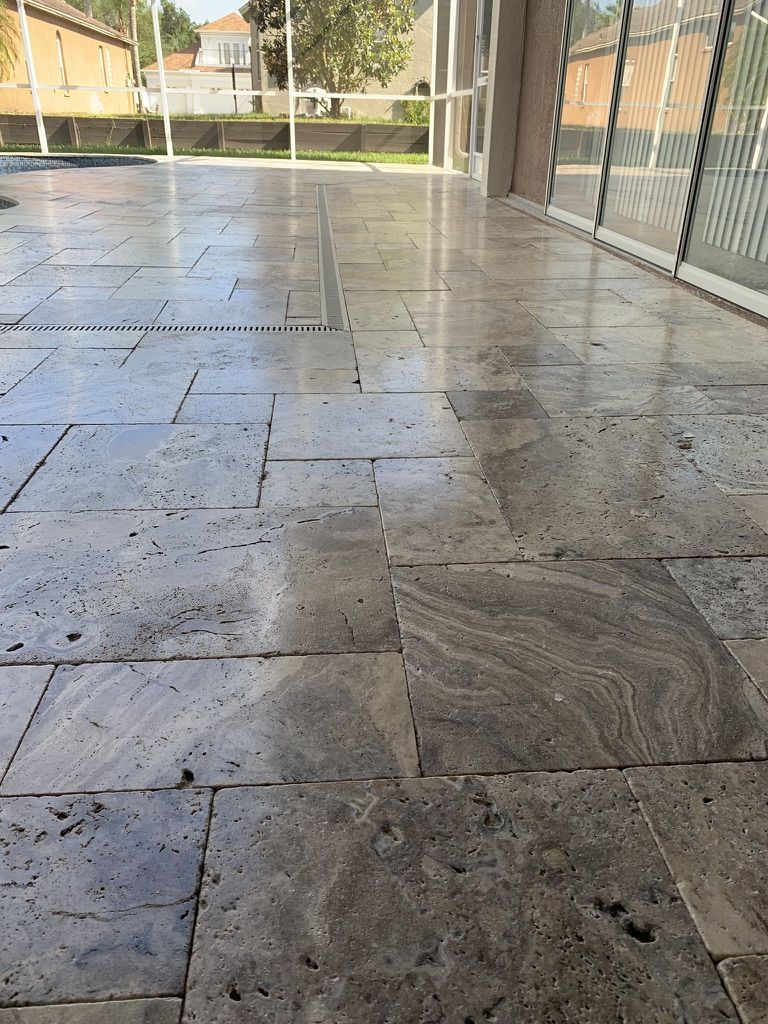
- The look doesn’t change. No added gloss, no film — the stone looks the way it did before sealing, just protected. For travertine and marble, that’s usually exactly what owners want.
- Nothing on the surface to peel. No film means no film failure — no peeling, flaking, or whitening layer to strip later. Protection wears away gradually inside the stone.
- The stone keeps breathing. Penetrating sealers let moisture vapor and mineral salts escape — which matters enormously for newly installed stone pushing efflorescence up as it cures.
That breathability is the core reason newly installed natural stone gets a penetrating sealer rather than a gloss film. Stone that was previously sealed with a film-forming product is a different case: a penetrating sealer can’t soak in through an existing film, so once a film is down, resealing means film over film.
Gloss vs. penetrating: side-by-side
| Wet-look gloss (film-forming) | Penetrating sealer | |
|---|---|---|
| Look | Deepens color, adds shine — the “wet look” | Natural, unchanged — no shine, no film |
| How it protects | Cures into a sacrificial wear layer on top; locks joint sand | Soaks into the pores; repels water and stains from within |
| Best for | Brick pavers — driveways, patios, pool decks — plus resealing natural stone that already carries a film sealer | Newly installed, never-film-sealed natural stone: travertine, marble, similar |
| Breathability | Film on the surface — needs correct prep and timing | Breathable — lets new stone release moisture and efflorescence |
| If it fails / wears | Worn film can be refreshed; a failed film must be stripped ($1.25/sq ft, 1–2 days) | No film to peel — protection fades and gets reapplied |
| Recoat cycle in Florida | Every 2–3 years (sun and traffic decide) | Assessed by surface at estimate |
“On our jobs the real choice is a gloss film for pavers, or a penetrating sealer that leaves the natural look.”
Which sealer does Kingdom Elite use on your surface?
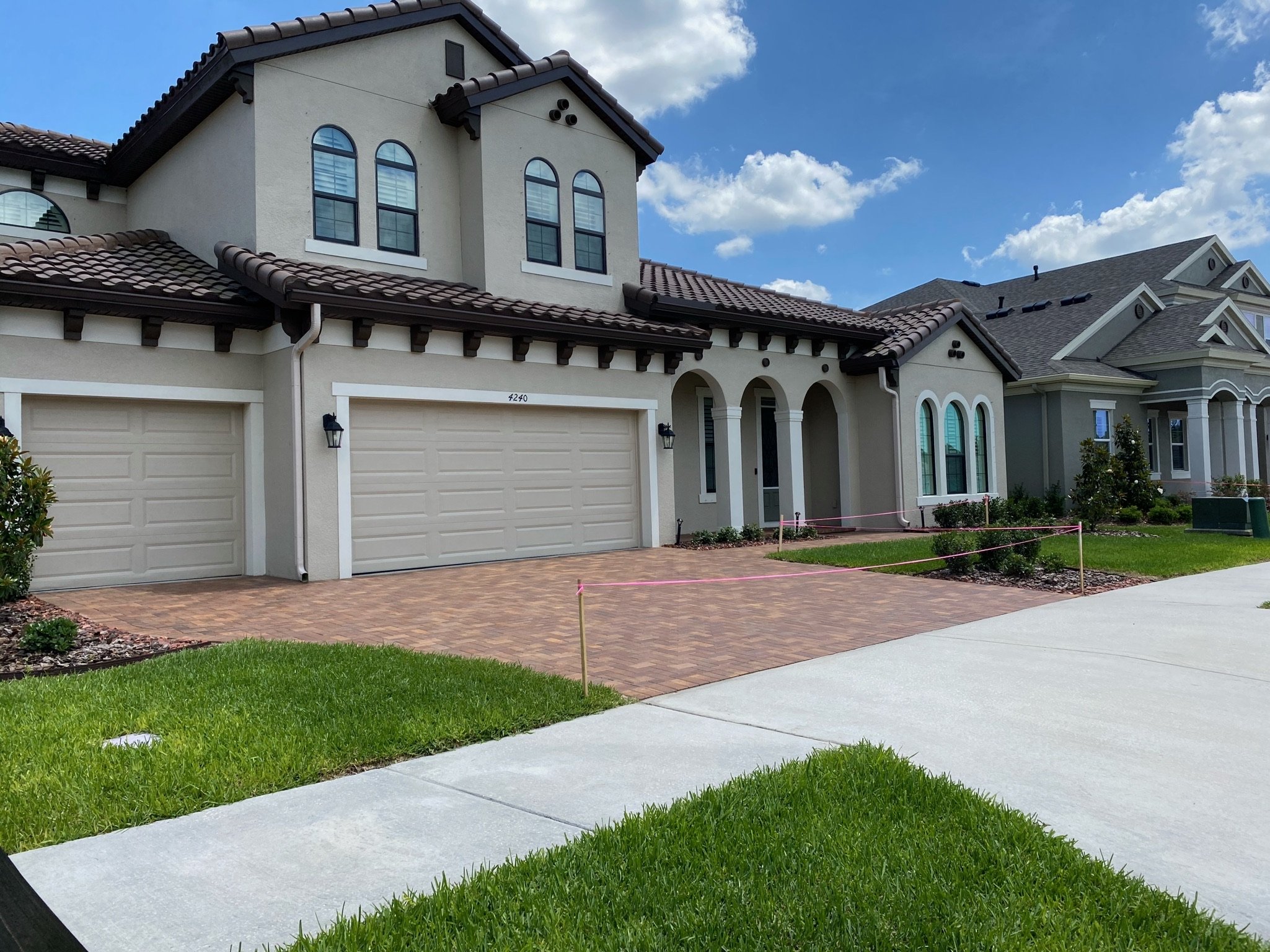
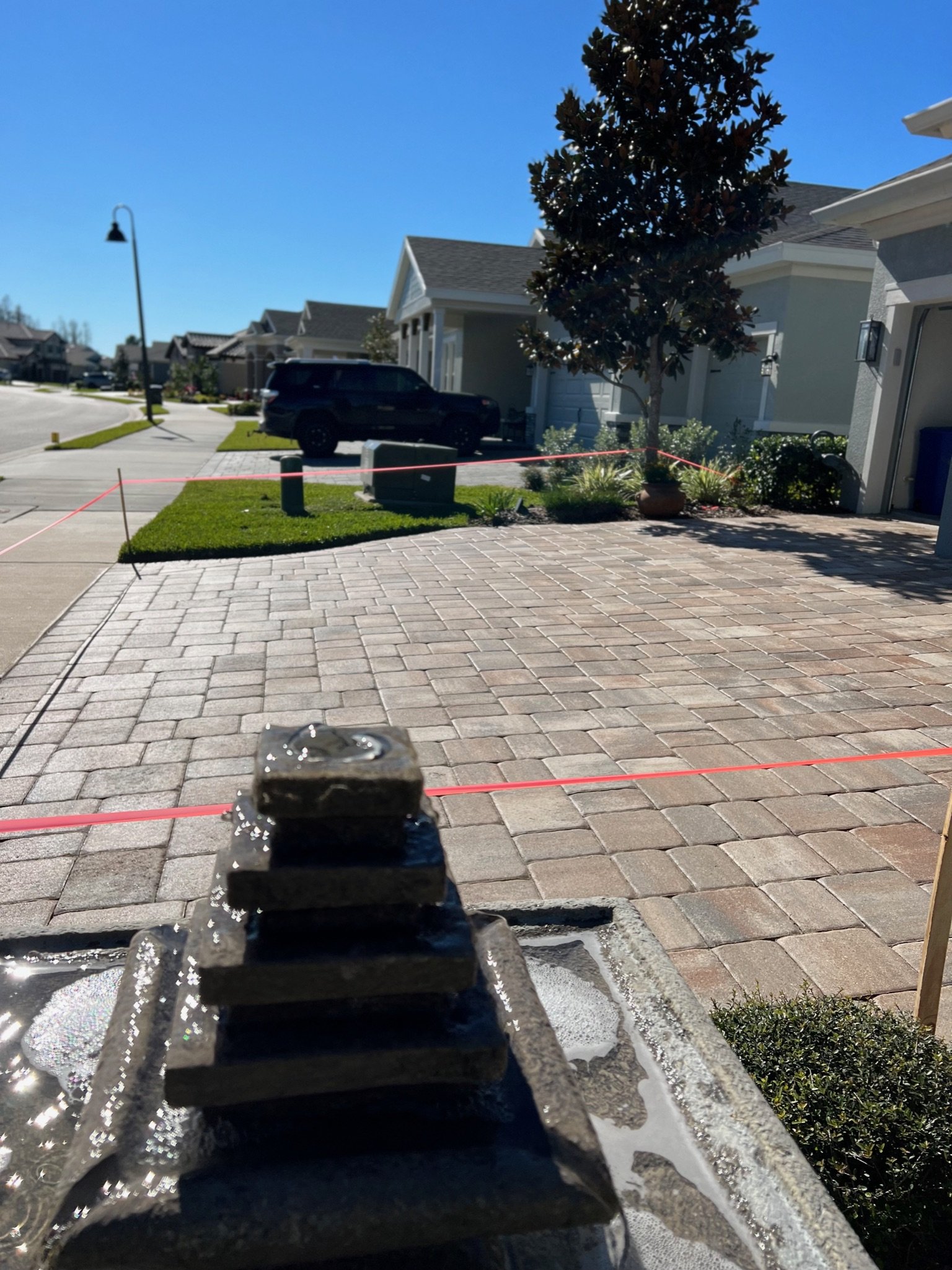
- Brick pavers (existing or new): Ure-Seal H2O Gloss — wet-look gloss, flood coat + top coat. Newly installed pavers get the same system, but not until their efflorescence has run its course and been treated (sealing too early traps the haze under the film).
- Newly installed travertine or natural stone: a penetrating sealer — protection without a film, so the new stone can breathe and keep its natural face.
- Previously sealed travertine / natural stone: if the stone already carries a film-forming sealer, it gets Ure-Seal H2O Gloss again — with an anti-slip additive mixed in. The only path back to a no-film finish is stripping the old sealer first ($1.25/sq ft, 1–2 days).
- Not sure what you have? That’s what the free estimate is for — we look at the surface (often from photos) and tell you which system fits before any work is scheduled.
One thing we don’t offer, because the honest answer beats the marketing answer: a general “matte” film finish on pavers. If you’ve seen “wet-look vs. matte vs. natural” comparisons online, on our jobs the real choice is the one in this guide — a gloss film for pavers, or a penetrating sealer that leaves the natural look where the surface calls for it.
Why does Florida’s climate make this choice matter more?
- UV. Tampa Bay’s summer UV index regularly runs 10+. A quality gloss film is the sacrificial layer that takes that UV instead of your paver color.
- Rain and humidity. Roughly 45–50 inches of rain a year plus year-round humidity means moisture is always moving through hardscapes. Films applied over trapped moisture or untreated efflorescence fail early here — which is why prep and correct timing are most of the outcome. Ure-Seal H2O Gloss is rain-safe about 2 hours after application.
- Biology. Warm plus wet means mold and algae colonize any unprotected surface. Both sealer types deny them the porous, damp surface they want — a sealed surface plus a soft wash every 6 months is the maintenance formula. See also: what’s the best paver sealer for Florida’s climate?
Will a gloss sealer make my pool deck slippery?
No — a quality sealer, properly applied, keeps traction. And for the places where wet bare feet meet sealed surface — pool decks and walkways — Kingdom Elite offers an anti-slip additive mixed into the sealer, adding grip without visibly changing the finish. Penetrating sealers leave no film at all, so they don’t change the stone’s natural traction. Either way, “sealed” doesn’t have to mean “slick” — say the word at estimate time and the anti-slip additive goes in.
What KES uses: for a wet-look/enhanced finish we apply ICT Ure-Seal H2O (Gloss, Natural, or Mid — note “Gloss” reads as a semi-gloss on brick pavers); for natural stone — travertine, marble, limestone, flagstone — you want to look untouched, we use ICT Stone Show H2O Invisible, a breathable penetrating sealer that protects without changing the stone’s color (an Enhancer version is available if you do want to deepen the tone). Source: ICT product data.
Frequently asked questions
What’s the best sealer for brick pavers in Florida?
A professional water-based wet-look gloss sealer. Kingdom Elite uses Ure-Seal H2O Gloss, applied as a flood coat plus a top coat — it deepens color, protects against UV and stains, and helps lock joint sand in place.
Should travertine get a gloss or penetrating sealer?
Newly installed travertine, marble, limestone and flagstone get a penetrating sealer — it protects from within, stays breathable while new stone releases efflorescence, and leaves the natural look unchanged. Travertine previously sealed with a film-forming sealer is resealed with the same product — Ure-Seal H2O Gloss — with an anti-slip additive mixed in.
Does a wet-look sealer change the color of pavers?
It deepens and enriches the color the pavers already have — like they look when rain-wet — and adds gloss. It doesn’t paint or tint them a new color.
Will sealing make my pavers or pool deck slippery?
No — a quality sealer keeps traction, and an anti-slip additive is available for pool decks and walkways for extra grip.
Can you switch from one sealer type to the other later?
Not directly — a penetrating sealer can’t soak in through an existing film, so previously film-sealed surfaces are resealed with the same film-forming product. Getting out of a film system means stripping the old sealer first ($1.25/sq ft, 1–2 days) before a new system goes down.
Sources: ICT Ure-Seal H2O product data (Innovative Concrete Technologies); ICT Stone Show H2O Invisible product data.
Want it done right the first time? Kingdom Elite Services cleans, re-sands and seals pavers across Tampa Bay — see paver sealing in Tampa Bay.