Cleaning · Florida
How to Clean Pavers Before Sealing in Florida
To clean pavers before sealing, deep-clean the surface with a high-flow pressure washer and a surface cleaner, treat any mold, algae, or efflorescence, then let the pavers dry completely. Sealing over a surface that isn’t fully clean traps dirt and organics underneath for good — which is why cleaning is the single most important step of the whole job.
A paver seal is only ever as good as the clean underneath it. Get the cleaning right and a good sealer lasts 2–3 Florida years; rush it, and you lock dirt, stains, and organic growth under a glossy coat you now have to strip off to fix.
Why cleaning matters more than the sealer
Sealer is a clear film. Whatever is on the paver when you seal — grime, tire marks, black mold, a dusting of efflorescence — gets sealed in, permanently, and shows through the finish. There is no touch-up: the only way to correct a seal applied over a dirty surface is to strip it ($1.25/sq ft) and start again. That is why every professional clean-and-seal begins with the surface, not the bucket.
Flow (GPM) beats pressure (PSI)
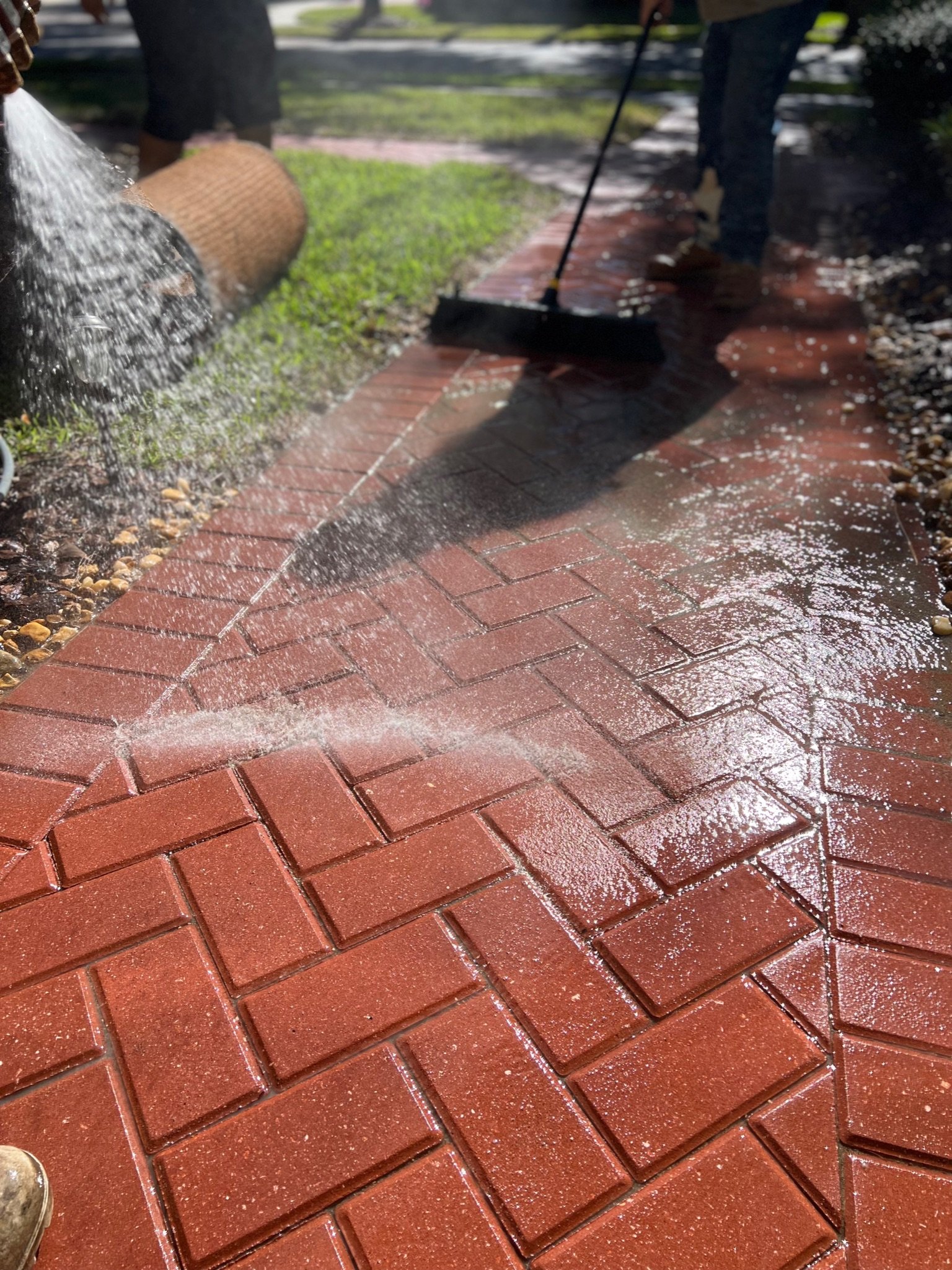
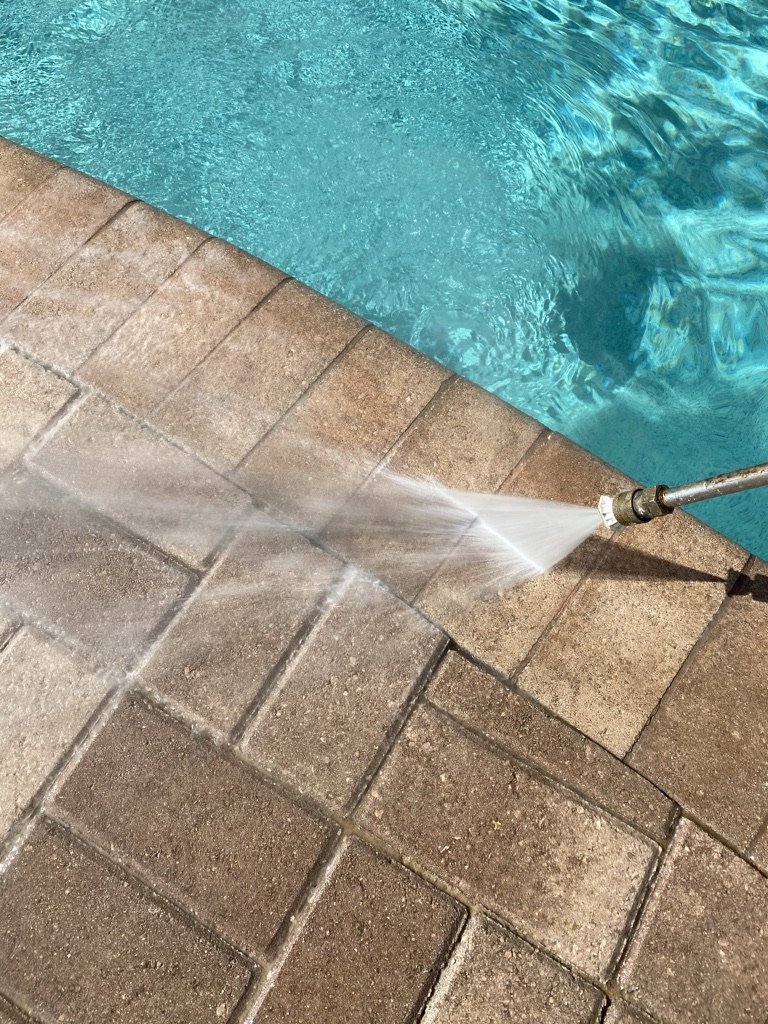
Most homeowners reach for the highest-PSI washer they can rent, but on a big surface it’s water flow — gallons per minute — that actually rinses grime away. Pressure breaks the dirt loose; flow carries it off. Kingdom Elite runs a 5.5 GPM professional rig with a surface cleaner that scrubs evenly; a typical box-store or rental washer moves only about 1.5–2.5 GPM and leaves the surface under-cleaned.
Worse, cranking the PSI on a low-flow unit to compensate scars soft pavers and blasts the joint sand clean out of the joints — creating a re-sanding job that didn’t need to exist. Even, controlled flow with a surface cleaner is what gets pavers clean without damaging them.
The three things a real clean removes
1. Dirt, grime & oil. General ground-in soil and light staining come up with the surface cleaner and, where needed, a non-acid paver cleaner and degreaser.
2. Organic growth. The black and green you see in shaded, damp areas is living mold and algae. It is treated on contact — not just pressure-washed — so it doesn’t simply regrow through the new sealer.
3. Efflorescence. The chalky white haze that migrates up through pavers is a salt deposit. It is removed with an acid-free efflorescence remover — never harsh muriatic acid, which etches the paver and can leave it looking worse.
“Seal over a surface that isn’t clean and you’ve trapped the problem under glass. Clean is step one, no exceptions.”
Let the pavers dry — completely
This is where DIY seals fail most often. Water-based sealer needs a dry surface; trapped moisture turns to a milky haze under the film. In Florida’s humidity that means waiting at least a day after cleaning, and longer after rain. If the joints or paver faces are still damp, it is not time to seal.
The professional process
A full Kingdom Elite clean-and-seal is a four-step job: pressure wash and rinse, treat organic growth and staining, re-sand the joints with ASTM C-144 sand (wet-sanded and hydro-compacted for a fuller, harder joint), and only then seal with a flood coat plus top coat of professional water-based sealer. Cleaning and re-sanding always come before the sealer — because everything the sealer locks in is decided before the first drop goes down.
Can I just rinse my pavers instead of pressure washing?
A garden-hose rinse clears loose dust but leaves the embedded grime, oil, mold, and efflorescence that a sealer will otherwise lock in. A real clean uses high flow and, where needed, a cleaner or organic treatment.
What happens if I seal dirty pavers?
The dirt and organics are sealed in permanently, the finish hazes and looks uneven, and the only correction is to strip the sealer and redo it — often costing more than doing it right the first time.
How long should pavers dry before sealing?
Until they are completely dry — usually a day or more in Florida humidity, longer after rain. Trapped moisture is the number-one cause of a hazy, milky seal.
Sources: CMHA Tech Note PAV-TEC-005 (cleaning, sealing & joint-sand stabilization); ICT Ure-Seal H2O product data (Innovative Concrete Technologies).
Want it done right the first time? Kingdom Elite Services cleans and restores pavers across Tampa Bay — see paver cleaning & pressure washing in Tampa Bay.
Want it done right the first time? Get a free on-site estimate →