Maintenance · Florida
How to Maintain Sealed Pavers: The Owner’s Manual
Sealed pavers are low-maintenance, not no-maintenance. Keep them looking new by rinsing or sweeping regularly, cleaning spills promptly, keeping sprinklers and heavy organic debris off them, and resealing every 2–3 years. Right after a fresh seal, stay off for about 4 hours on foot and 48–72 hours before parking on them.
The whole point of sealing is to make your pavers easier to live with — and they are. But a seal isn’t a force field. A few small habits are the difference between pavers that still look freshly sealed at year three and ones that look tired by next summer.
Right after sealing
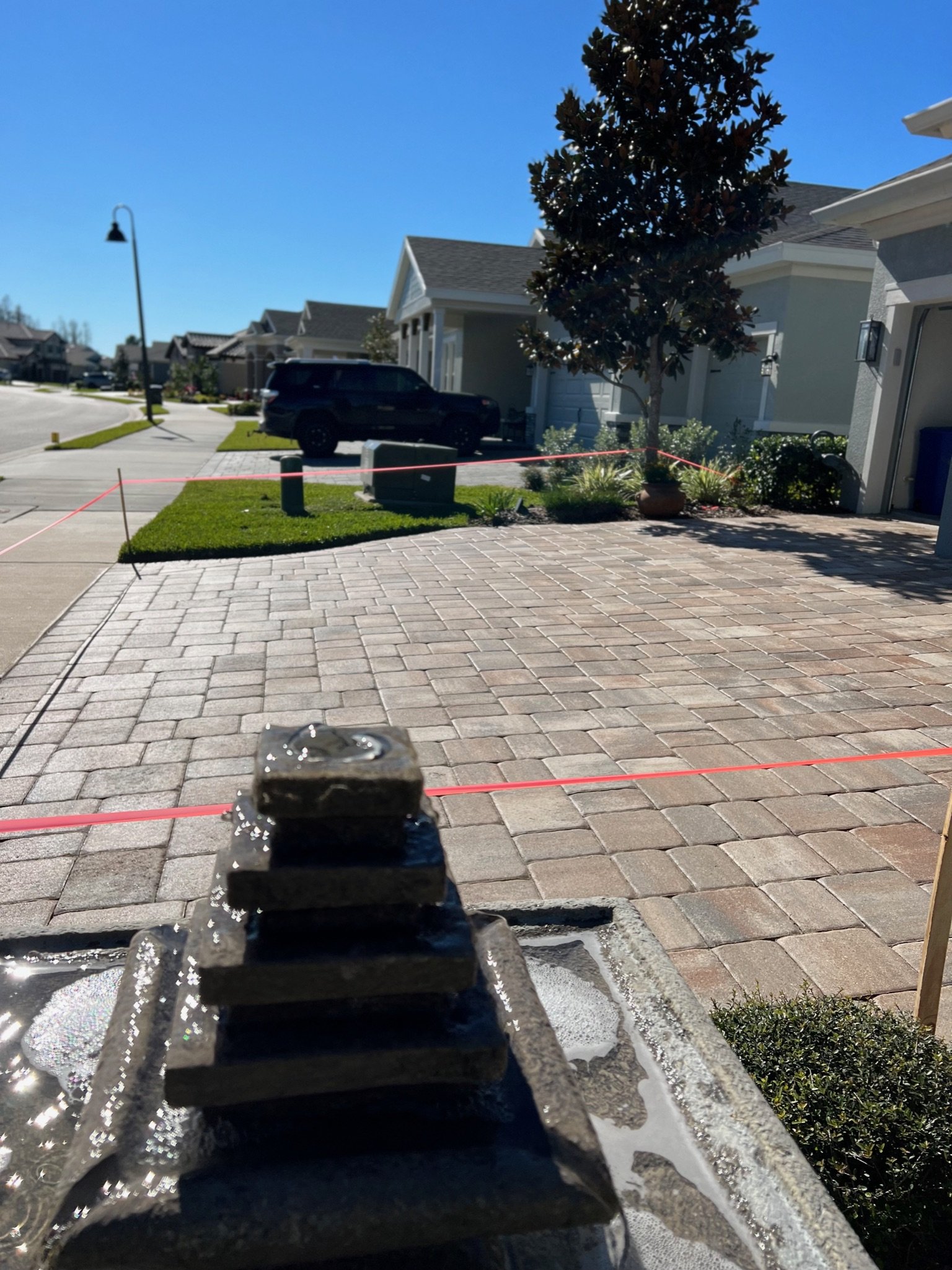
Fresh sealer needs time to cure. Keep foot traffic off for about 4 hours, and don’t drive or park on a freshly sealed driveway for 48–72 hours — tires on soft, uncured sealer are the classic cause of hot-tire marks. Keep pets and sprinklers off during the cure window too.
Everyday upkeep
Day to day, sealed pavers just need the basics. Sweep or rinse loose dirt and leaves so organic debris doesn’t sit and stain. Wipe up spills — oil, wine, fertilizer — promptly; on a sealed surface they lift far more easily before they dry. Use felt pads under heavy furniture so you don’t drag and scuff the finish, and keep sprinklers from constantly soaking the pavers, since standing water invites mold and efflorescence.
Every few months
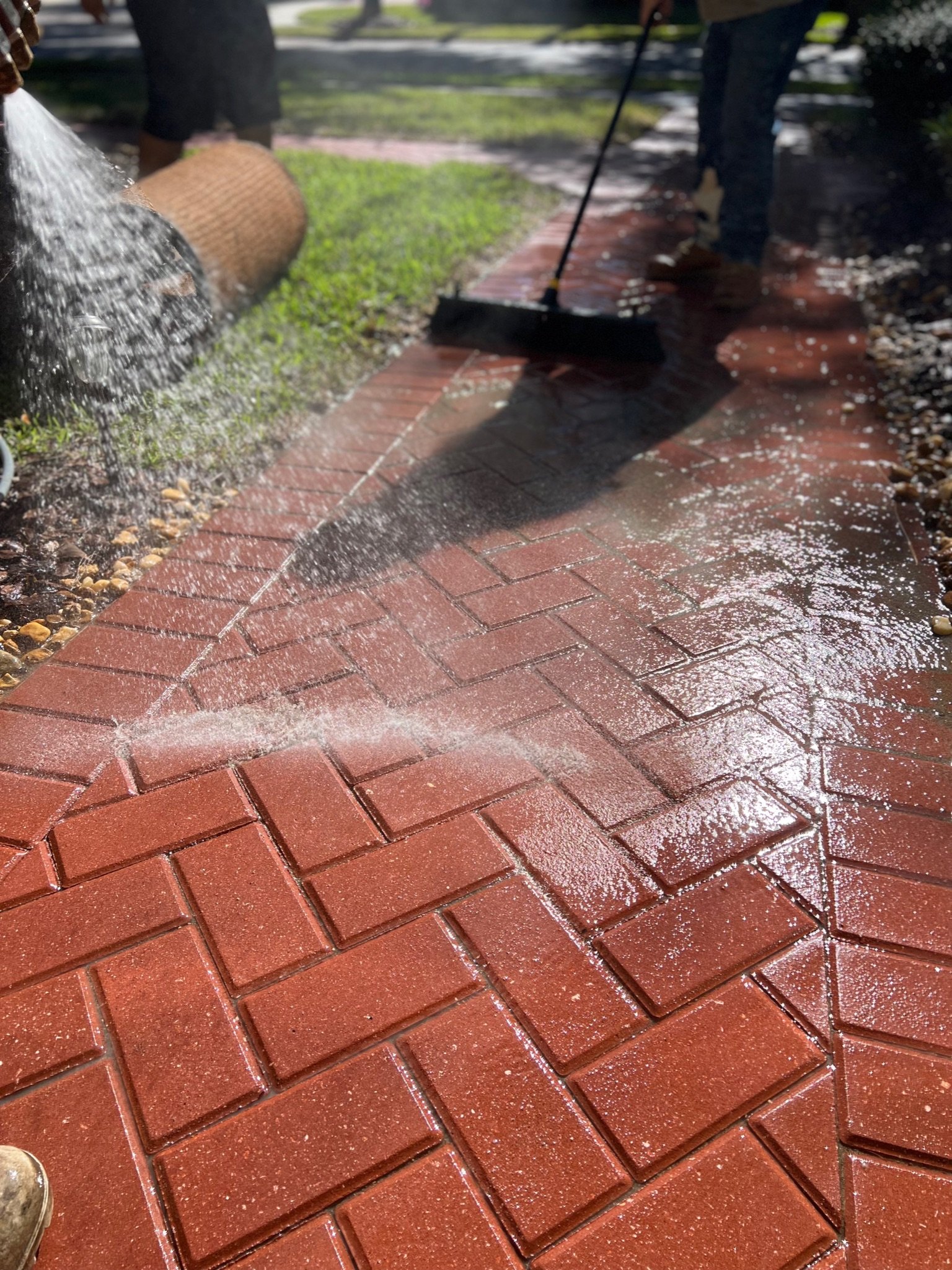
A light seasonal once-over keeps things easy. Give the pavers a gentle low-pressure wash a couple of times a year — skip the narrow high-PSI nozzle that strips joint sand and scars the finish. Blow off leaves and organic buildup before it packs into the joints, and trim back shrubs and branches so the surface gets airflow and sun, which discourages the black and green growth Florida shade encourages.
The reseal clock
Even well-kept pavers need a fresh coat eventually. In Florida, plan on resealing every 2–3 years — sooner for a full-sun driveway or a pool deck near saltwater, longer for a shaded patio. The simple water-drop test tells you when: splash a little water on the pavers, and if it soaks in and darkens the surface instead of beading, the seal has worn thin and it’s time. Staying on schedule keeps the joints locked and the color protected, so each reseal is a quick refresh rather than a full restoration.
“Low-maintenance pavers still have a maintenance routine — it’s just a short one.”
How do you maintain sealed pavers?
Sweep or rinse regularly, clean spills promptly, keep sprinklers and heavy organic debris off the surface, give them a gentle low-pressure wash a couple of times a year, and reseal every 2 to 3 years. Avoid high-PSI nozzles that strip joint sand.
How soon can you walk on sealed pavers?
About 4 hours for light foot traffic after sealing, and 48 to 72 hours before driving or parking on them. Keeping vehicles off during the cure window prevents hot-tire marks.
Do sealed pavers still need cleaning?
Yes, but far less. Sealing closes the pores so dirt, spills, and organic growth rinse off much more easily. Routine sweeping and the occasional gentle wash keep them looking new between reseals.
Sources: CMHA Tech Note PAV-TEC-006 (operation & maintenance); ICT Ure-Seal H2O product data (Innovative Concrete Technologies).
Want it done right the first time? Kingdom Elite Services cleans and restores pavers across Tampa Bay — see paver cleaning & pressure washing in Tampa Bay.