Maintenance · Florida
New Pavers: When Can You Seal Them?
There is no fixed number of days: seal brand-new pavers once their efflorescence has run its course. Fresh pavers are still curing and pushing out moisture and efflorescence salts; seal too soon and you trap them under the film, causing a milky haze. Once it has, remove the efflorescence, clean the pavers, let them dry fully, and seal. Newly installed natural stone can take a breathable penetrating sealer sooner.
New pavers look their best the day they’re installed, so it’s tempting to lock in that look immediately. Sealing too early is one of the most common ways a beautiful new install ends up hazy — and it’s completely avoidable with a little patience.
Why new pavers need to wait
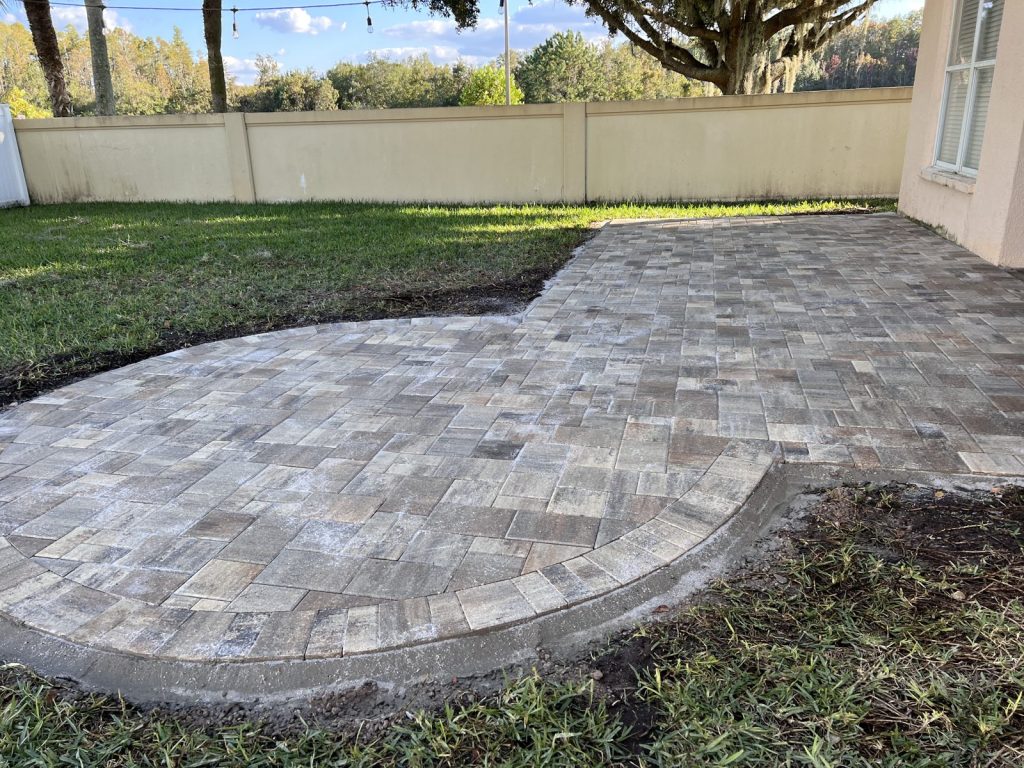
Concrete pavers keep curing for weeks after they’re made and laid, and during that time they release moisture and the soluble salts that cause efflorescence — that chalky white bloom. If you seal over a paver that’s still off-gassing moisture and pushing salts to the surface, the sealer traps it all underneath, where it clouds and can’t be wiped away.
Why there is no fixed waiting period
You will see a set number of days quoted online, but the real signal is the efflorescence, not the calendar. New concrete pavers are ready to seal once they have cured and the first flush of efflorescence has come to the surface and run its course, so it can be removed. How long that takes varies from job to job. It also gives the joint sand time to settle and the install to weather a little, so you’re sealing a stable, finished surface rather than a moving one.
Deal with the first efflorescence
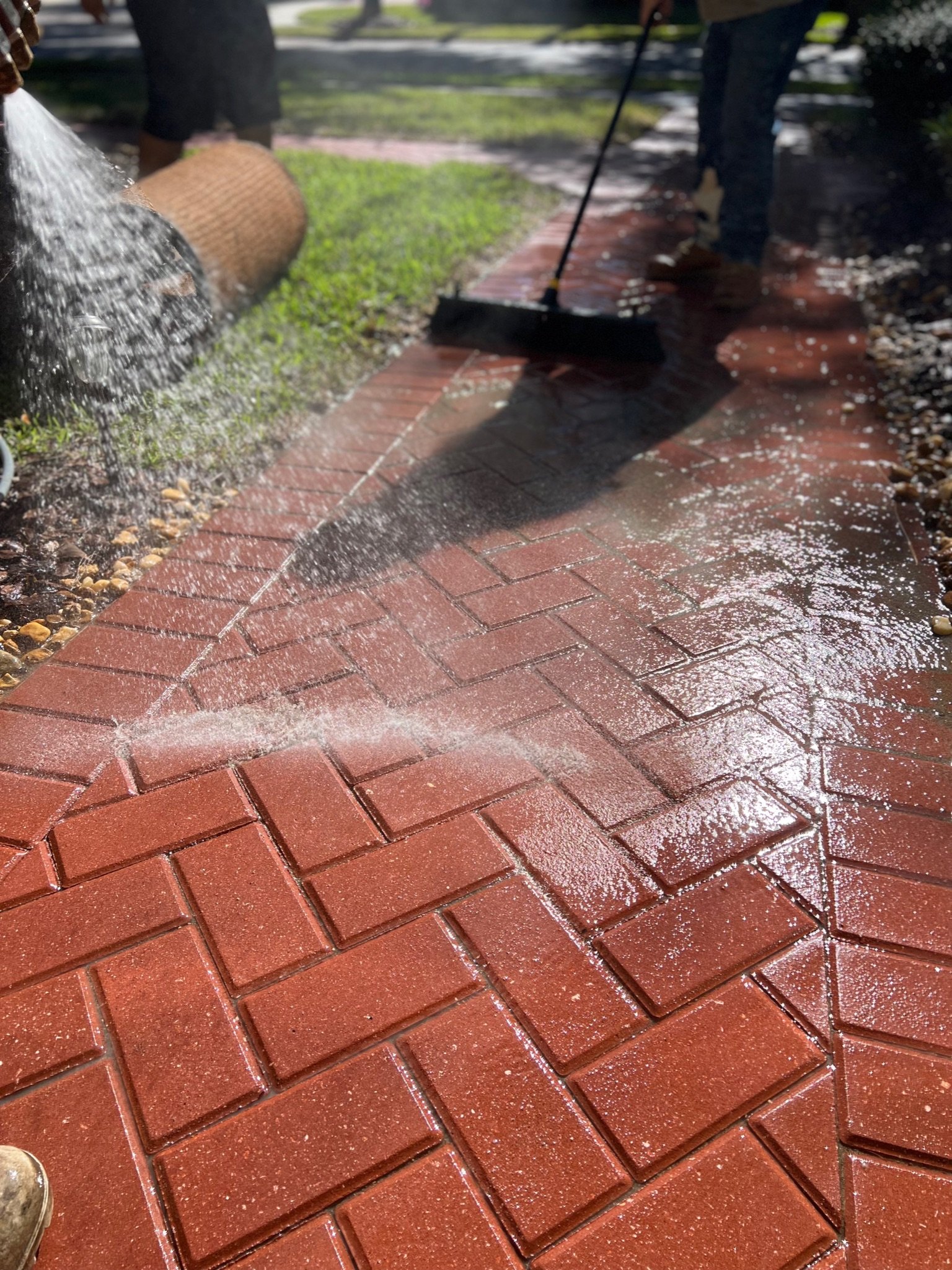
Don’t panic if new pavers develop a white haze in those first weeks — it’s normal and harmless. When it’s time to seal, that efflorescence is removed with an acid-free efflorescence remover first, never muriatic acid, then the pavers are cleaned and dried before the sealer goes down.
“Sealing a new paver too early doesn’t lock in the look — it locks in the moisture.”
Newly installed natural stone is different
Travertine and other natural stone don’t behave like concrete pavers. For a fresh natural-stone install, a breathable penetrating sealer (Kingdom Elite uses ICT’s Stone Show H2O Invisible) can be applied sooner because it soaks in and protects without forming a surface film that would trap moisture. It keeps the natural look while guarding against staining from the start.
How long should you wait to seal new pavers?
There is no fixed number of days. New concrete pavers are ready once they have cured and the first efflorescence has run its course and been removed. Newly installed natural stone can take a breathable penetrating sealer sooner.
Can you seal pavers too soon?
Yes, and it is a common mistake. Sealing before new pavers finish curing traps moisture and efflorescence salts under the film, causing a milky haze that usually has to be stripped and redone.
Do new pavers get efflorescence?
Often, yes. New concrete pavers commonly develop a white efflorescence bloom in the first weeks as they cure. It is harmless and is removed with an acid-free remover before sealing.
Sources: CMHA Tech Note PAV-TEC-005 (cleaning, sealing & joint-sand stabilization); ICT Ure-Seal H2O product data (Innovative Concrete Technologies); ICT Stone Show H2O Invisible product data.
Want it done right the first time? Kingdom Elite Services installs and seals new pavers across Tampa Bay — see paver installation in Tampa Bay.