Florida-Specific · Seasonal
Protecting Pavers Before Storm & Hurricane Season
The best storm-season protection for pavers is a sound seal over full, compacted joints — done and cured before hurricane season (June through November). Sealed pavers with tight joints shed heavy rain, resist joint washout and erosion, and clean up far faster after a storm. Seal in spring so it’s cured before the first big rain, and after a storm, clear debris promptly before it stains.
Florida gives you a warning every year: hurricane season runs June through November, and the daily deluges start well before the named storms. The pavers you protect in spring are the ones that shrug off summer.
What storms actually do to pavers
Heavy rain is hard on a paver surface in a few ways. It washes joint sand down and out of any loose or low joints, opening them to erosion and weeds. It drives leaves and debris across the surface that stain if they sit. And standing water after a storm feeds mold and algae. Bare or under-sealed pavers soak all of that up; sealed ones shed it.
A sealed, tight-jointed surface rides it out
Two things carry pavers through storm season: a current seal and full, compacted joints. The seal keeps water running off the surface instead of soaking into the pavers and base, and locked joints don’t wash out under a downpour. Together they mean less erosion, less staining, and a surface that hoses clean in minutes once the weather clears.
“Storm-proofing pavers isn’t something you do during the storm — it’s the seal and the joints you locked in before it.”
Seal in spring, before the season
The move is to seal in the spring dry window so the coat is fully cured before the rains ramp up. A fresh seal needs a dry surface and a rain-free cure period, which gets harder to find once daily storms arrive — so timing it ahead of June is the easy win. If you missed spring, it can still be done mid-season by working around the forecast.
Check the joints and edges first
Before sealing, the joints get refilled and compacted (ASTM C-144, wet-sanded) and any loose pavers or edge restraint addressed, so there are no weak points for water to exploit. Full joints under a fresh seal are what actually resist a storm — sealing over empty joints just locks in the vulnerability.
After the storm
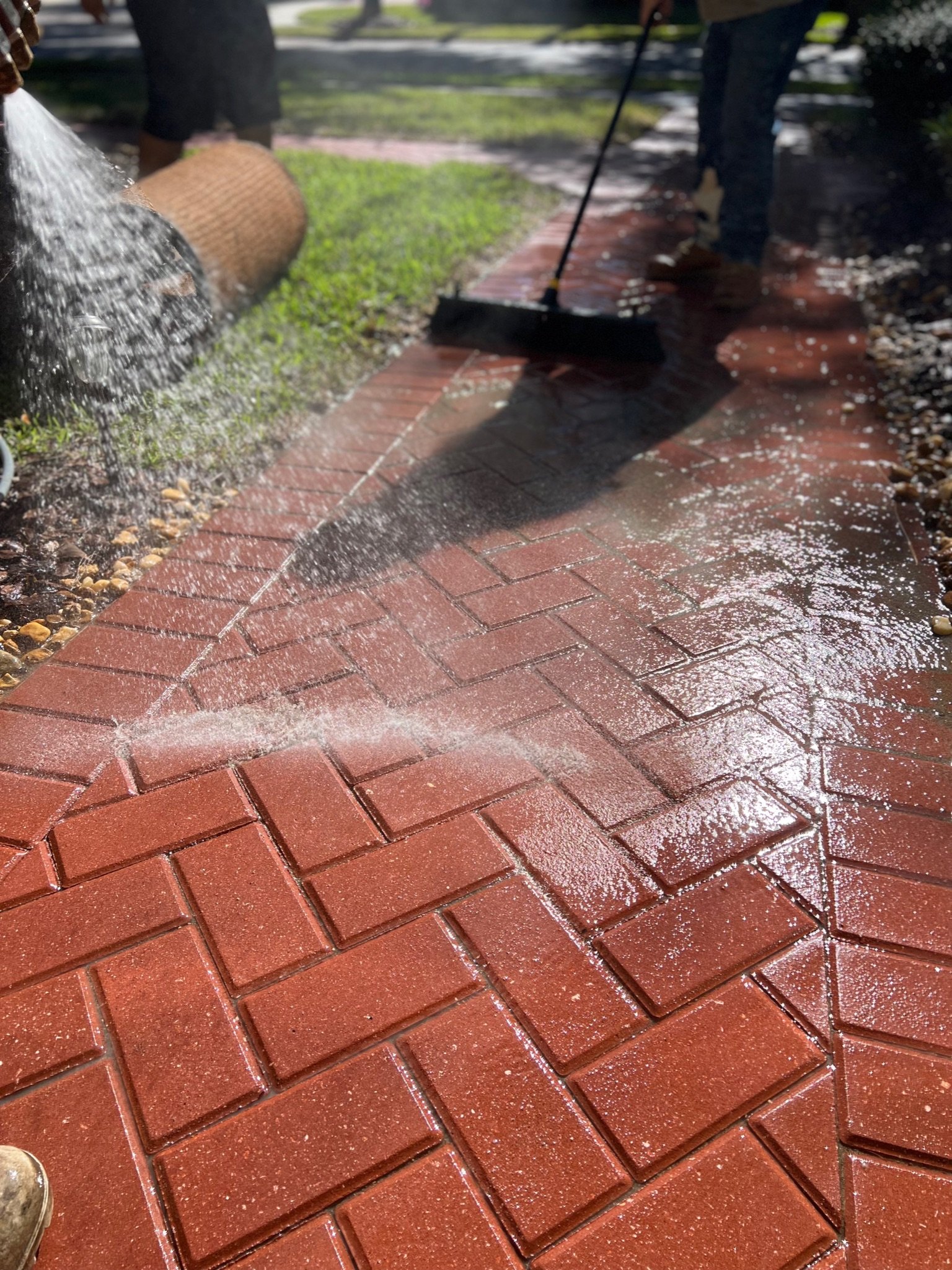
Once it passes, clear leaves and debris promptly before wet organic matter stains the surface, and give the pavers a rinse. On a sealed deck or driveway this is a quick job — the storm grime rinses off the surface rather than out of the stone. Keep an eye out for any new mold in shaded, slow-draining spots and treat it early.
How do you protect pavers from heavy rain?
Keep the joints full and compacted and the surface sealed. Full joints resist washout, and a current seal makes water run off the surface instead of soaking into the pavers and base. Do it before the rainy season so the seal is cured in time.
Should you seal pavers before hurricane season?
Yes. Sealing in spring, before hurricane season (June through November), means the coat is cured and ready for the heavy summer rain. A sealed surface over tight joints sheds water, resists erosion, and cleans up faster after storms.
Do storms damage sealed pavers?
Sealed pavers with full joints hold up far better than bare ones. The main storm risks — joint-sand washout, staining from debris, and mold from standing water — are exactly what a current seal and compacted joints are designed to prevent.
Sources: CMHA Tech Note PAV-TEC-005 (cleaning, sealing & joint-sand stabilization); CMHA Tech Note PAV-TEC-006 (operation & maintenance); ICT Ure-Seal H2O product data (Innovative Concrete Technologies).
Want it done right the first time? Kingdom Elite Services re-sands and re-levels pavers across Tampa Bay — see paver repair in Tampa Bay.