Problems & Fixes · Florida
Why Is My Paver Sealer Hazy or Cloudy? (Causes & Fix)
A hazy or cloudy paver seal is almost always trapped moisture. It happens when pavers are sealed while damp or in high humidity, when a non-breathable solvent sealer traps moisture in Florida’s climate, or when sealer is over-applied and puddles. The fix is usually to strip the affected sealer and reseal correctly — on a fully dry surface, with a breathable water-based sealer, in thin even coats.
Few things are more frustrating than a fresh seal that dries to a milky, cloudy film. The good news: haze almost always traces to one of a handful of causes, and once you know which, the fix is straightforward.
Cause 1: sealed over a damp surface
This is the most common culprit. If the pavers or the joint sand still hold moisture when the sealer goes down, that moisture gets trapped under the film and clouds it white. In Florida’s humidity, “looks dry” isn’t the same as fully dry — pavers often need a day or more after cleaning, longer after rain.
Cause 2: a non-breathable solvent sealer
Solvent-based sealers form a less breathable film. In our climate, where moisture is always moving up through the paver, that film can trap the vapor and turn milky — the classic solvent blush. It’s a big reason we use a breathable, water-based sealer here.
Cause 3: over-application and puddling
More sealer is not more protection. When sealer is laid on too thick or allowed to pool in low spots, the excess can’t cure properly and dries to a cloudy, glossy blotch. Thin, even coats — and never letting it puddle — keep the finish clear.
Cause 4: sealed over efflorescence or dust
If the surface wasn’t fully clean — a film of efflorescence salts or fine dust left behind — the sealer locks that white haze in permanently. Proper cleaning, including acid-free efflorescence removal, has to come first.
“Haze isn’t bad sealer — it’s good sealer over a wet, dirty, or over-loaded surface.”
How it’s fixed
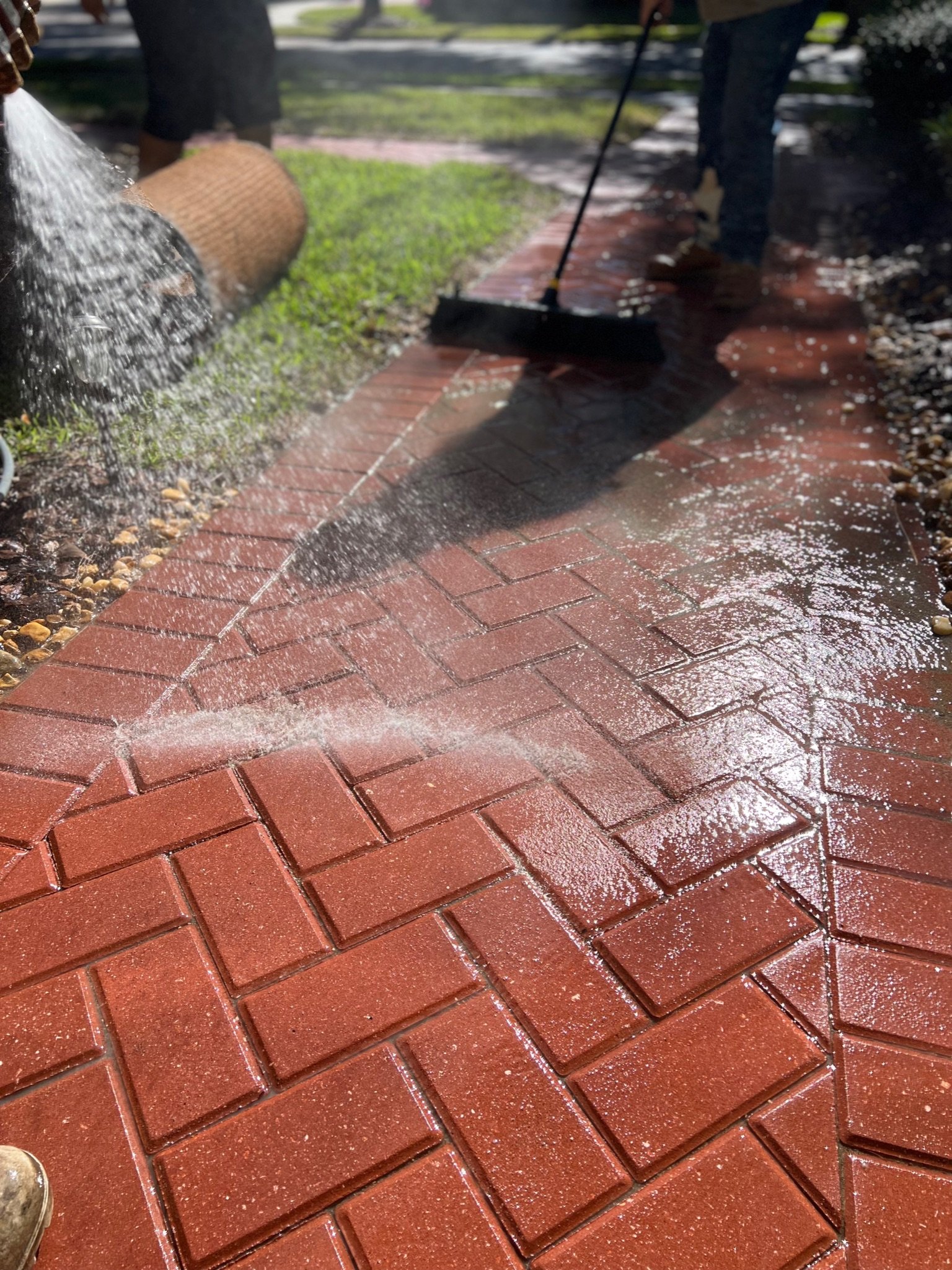
Cured haze generally can’t be buffed or washed out — the cloud is under the film. The reliable fix is to strip the affected sealer ($1.25/sq ft) and reseal properly: a fully dry, clean surface, a breathable water-based sealer, and thin, even coats. A professional can strip and re-do a hazed area so it blends with the rest.
How to prevent it
Prevention is simple once you know the causes: seal only a fully dry, fully clean surface, use a breathable water-based sealer suited to Florida, apply thin even coats and never let it puddle, and remove any efflorescence first. Do those and haze simply doesn’t happen.
Why did my paver sealer turn cloudy?
Almost always trapped moisture. The pavers were sealed while damp or in high humidity, a non-breathable solvent sealer trapped moisture, the sealer was over-applied and puddled, or the surface had efflorescence or dust that got locked under the film.
Can you fix hazy paver sealer?
Usually the cloud is under the cured film and can't be buffed out, so the fix is to strip the affected sealer and reseal correctly — on a fully dry, clean surface with a breathable water-based sealer in thin even coats.
How do you prevent paver sealer from hazing?
Seal only a fully dry and fully clean surface, use a breathable water-based sealer suited to Florida's humidity, apply thin even coats without letting it puddle, and remove any efflorescence before sealing.
Sources: ICT Ure-Seal H2O product data (Innovative Concrete Technologies); CMHA Tech Note PAV-TEC-005 (cleaning, sealing & joint-sand stabilization).
Want it done right the first time? Kingdom Elite Services cleans, re-sands and seals pavers across Tampa Bay — see paver sealing in Tampa Bay.