Florida-Specific · Pool Decks
Pool Deck & Lanai Paver Sealing (Anti-Slip & Saltwater)
Pool decks and lanais need sealing built for water, salt, chlorine, and bare feet. The key is anti-slip: a glossy film can be slick when wet, so pool-deck sealing either uses a penetrating/invisible sealer or adds an anti-slip additive (Kingdom Elite includes it on natural-stone reseals previously done with it). Salt and constant moisture wear the seal faster, so pool decks reseal toward the shorter end of the 2–3 year window.
A pool deck is the hardest-working paver surface on a Florida property — wet all the time, splashed with salt or chlorine, baked by the sun, and walked on barefoot. Sealing it well means solving for all of that at once, and getting the slip question right above all.
Why pool decks and lanais are different
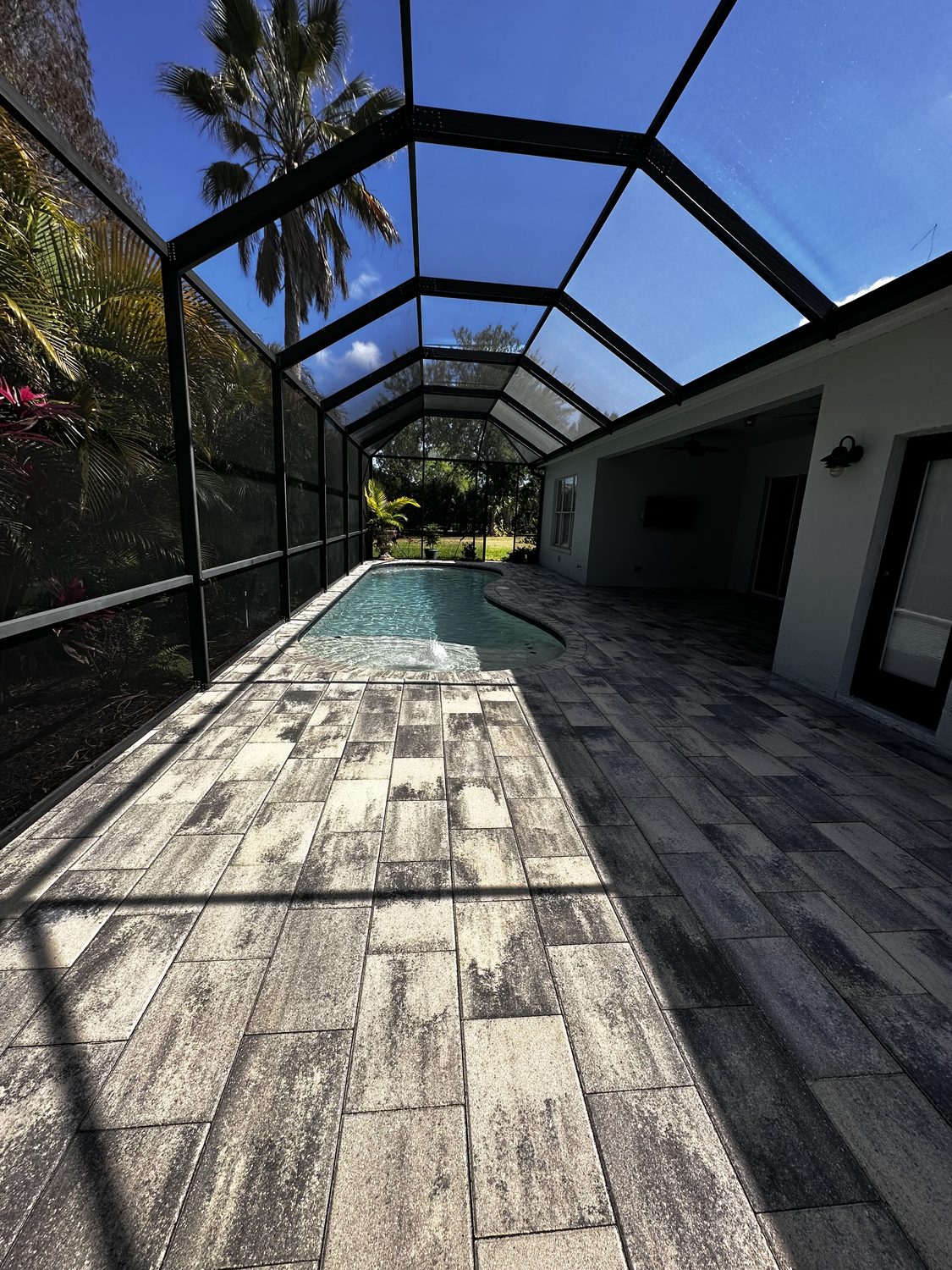
Unlike a driveway, a pool deck is constantly wet, exposed to saltwater or chlorine, and used with bare feet. Screened lanais add another wrinkle: they stay shaded and damp, which invites mold and algae. A pool-deck seal has to handle moisture and chemicals while staying comfortable and safe underfoot.
Anti-slip is non-negotiable
This is where pool decks demand a different approach than a glossy driveway. A high-gloss film can get slick when wet — not what you want around a pool. So pool-deck sealing leans on a penetrating or natural-finish sealer that protects without a slick surface, and where a film finish is used, an anti-slip additive is worked in for traction. Kingdom Elite includes that anti-slip additive on natural-stone reseals that were previously sealed with it, so the deck stays safe as well as protected.
“Around a pool, traction beats shine. The right seal protects the deck without making it slippery.”
Salt and chlorine wear it faster
Saltwater pools and chlorine are tough on a seal — salt is abrasive and draws moisture, and both speed up wear and efflorescence. A good seal actually protects the pavers from that chemical exposure, but it also means pool decks should be resealed toward the shorter end of the Florida 2–3 year window, especially near saltwater.
Travertine pool decks
Travertine is a Florida pool-deck favorite because it stays cooler underfoot, and it’s sealed differently than concrete pavers. It takes a breathable penetrating sealer (Kingdom Elite uses ICT’s Stone Show H2O Invisible) that soaks in to guard against staining and salt while keeping the natural, matte, non-slick look — no glossy film to get slippery. Travertine pool decks are a different case — here’s when they need sealing.
Lanais: shade means mold
Screened lanai pavers live in shade and humidity, so organic growth is the recurring enemy. The job is the same clean-treat-seal process, with extra attention to killing the mold and algae before sealing — and once sealed, the enclosed pavers rinse clean in minutes instead of needing a scrub.
Should you seal pool deck pavers?
Yes. Sealing protects pool-deck pavers from salt, chlorine, and constant moisture, reduces algae, and makes them far easier to keep clean. The important part is using an anti-slip or penetrating finish so the deck stays safe underfoot when wet.
Is a sealed paver pool deck slippery?
It doesn't have to be. A high-gloss film can be slick when wet, which is why pool decks use a penetrating or natural-finish sealer, or a film sealer with an anti-slip additive worked in for traction. Done right, a sealed deck is no more slippery than an unsealed one.
How often should you reseal a pool deck in Florida?
Toward the shorter end of the 2 to 3 year window, especially near saltwater. Constant moisture and salt or chlorine wear a pool-deck seal faster than a shaded patio, so plan on more frequent resealing.
Sources: CMHA Tech Note PAV-TEC-005 (cleaning, sealing & joint-sand stabilization); ICT Stone Show H2O Invisible product data; ICT Ure-Seal H2O product data (Innovative Concrete Technologies).
Want it done right the first time? Kingdom Elite Services cleans, re-sands and seals pavers across Tampa Bay — see paver sealing in Tampa Bay.