Florida-Specific · Timing
Best Time of Year to Seal Pavers in Florida
The best time to seal pavers in Florida is the dry season — roughly October through May — when you can count on a dry surface and a clear forecast. Sealer needs dry pavers and 24–48 hours without rain to cure. You can seal in summer, but you’re working around daily storms. Aim for mild temperatures (about 55–90°F) and a dry window.
Sealer doesn’t care what the calendar says — it cares whether the pavers are dry and whether it’s going to rain before it cures. In Florida, that turns timing into the whole game.
The two things a seal needs: a dry surface and a rain-free window
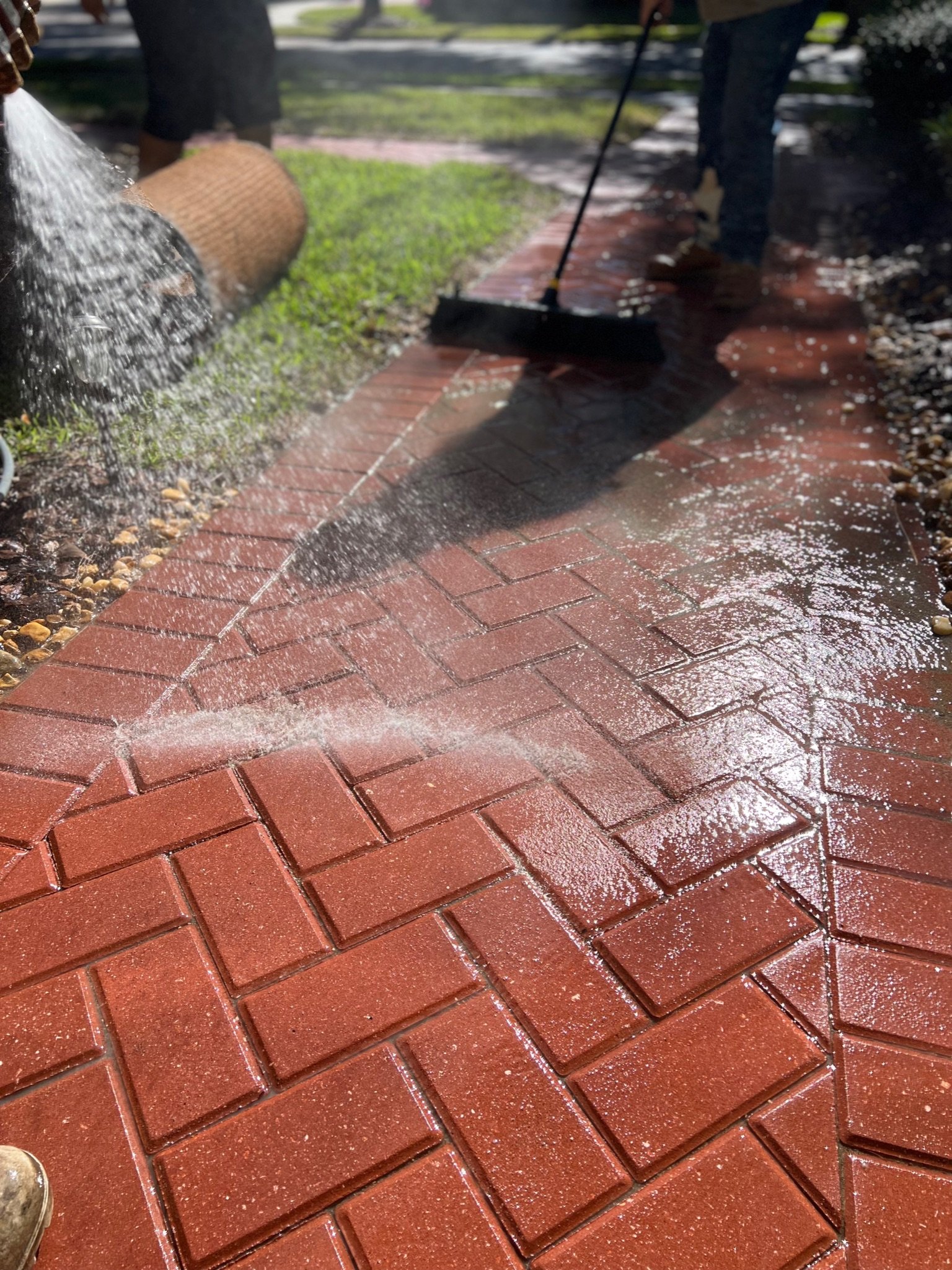
Every good seal starts on a fully dry surface — trapped moisture is the number-one cause of haze. Then the fresh sealer needs roughly 24–48 hours without rain to cure properly. Miss either one and you risk a milky, blotchy finish. That’s why the forecast, not the season, is what actually decides sealing day.
Why the dry season wins
From about October through May, Florida gives you long stretches of dry, mild weather — exactly the reliable window sealer wants. Lower humidity means pavers dry out faster after cleaning, and clear multi-day forecasts are far easier to find. It’s also perfect timing to have driveways and pool decks looking their best for snowbird season and the holidays.
Sealing in the summer
You can seal in the rainy season — we do it all the time — it just takes planning around the near-daily afternoon storms. That usually means morning applications on a surface that’s had time to dry, and a close eye on the radar so the sealer has its cure window before the next downpour. It’s doable, but it’s a forecast game.
“In Florida you don’t seal by the calendar — you seal by the forecast. The dry season just gives you more good days.”
Temperature matters too
Our sealer is applied in a comfortable range — roughly 55 to 90°F. Avoid sealing in the peak heat of a midsummer afternoon, when the surface is scorching and the sealer can flash off too fast, and avoid the rare cold snap below the product’s minimum. Mild mornings hit the sweet spot.
Plan ahead for the dry-season rush
Because everyone wants their pavers done in the dry season, that’s the busy window for sealing companies. If you’re aiming to have your driveway or pool deck sealed before the holidays or spring guests, book early — the best weather days fill up fast.
What is the best month to seal pavers in Florida?
Any month in the dry season, roughly October through May, is ideal because you get reliable dry weather and clear forecasts. The real requirement is a fully dry surface and 24 to 48 hours without rain for the sealer to cure.
Can you seal pavers in the summer in Florida?
Yes, but you have to work around the near-daily afternoon storms. That usually means morning applications on a dry surface and watching the forecast so the sealer gets its cure window before the next rain.
Can you seal pavers when it is going to rain?
No. The pavers must be dry when you seal, and the fresh sealer needs about 24 to 48 hours without rain to cure. Rain on uncured sealer causes hazing and an uneven, blotchy finish.
Sources: CMHA Tech Note PAV-TEC-005 (cleaning, sealing & joint-sand stabilization); ICT Ure-Seal H2O product data (Innovative Concrete Technologies).
Want it done right the first time? Kingdom Elite Services cleans, re-sands and seals pavers across Tampa Bay — see paver sealing in Tampa Bay.