Maintenance · Florida
Can You Pressure Wash Sealed Pavers?
Yes — you can pressure wash sealed pavers, but gently. Use low pressure, a wide fan tip, and keep the wand back and moving. Avoid narrow high-PSI nozzles, which strip the sealer and blast the joint sand out. A surface cleaner is the safest tool. And never pressure wash a freshly sealed surface — wait until it’s fully cured.
A sealed surface is easier to clean, so a periodic wash is part of good upkeep. The catch is that the same machine that cleans your pavers can also wreck the seal you paid for — if you use it like a pressure-washing commercial instead of a maintenance tool.
Low and slow is the rule
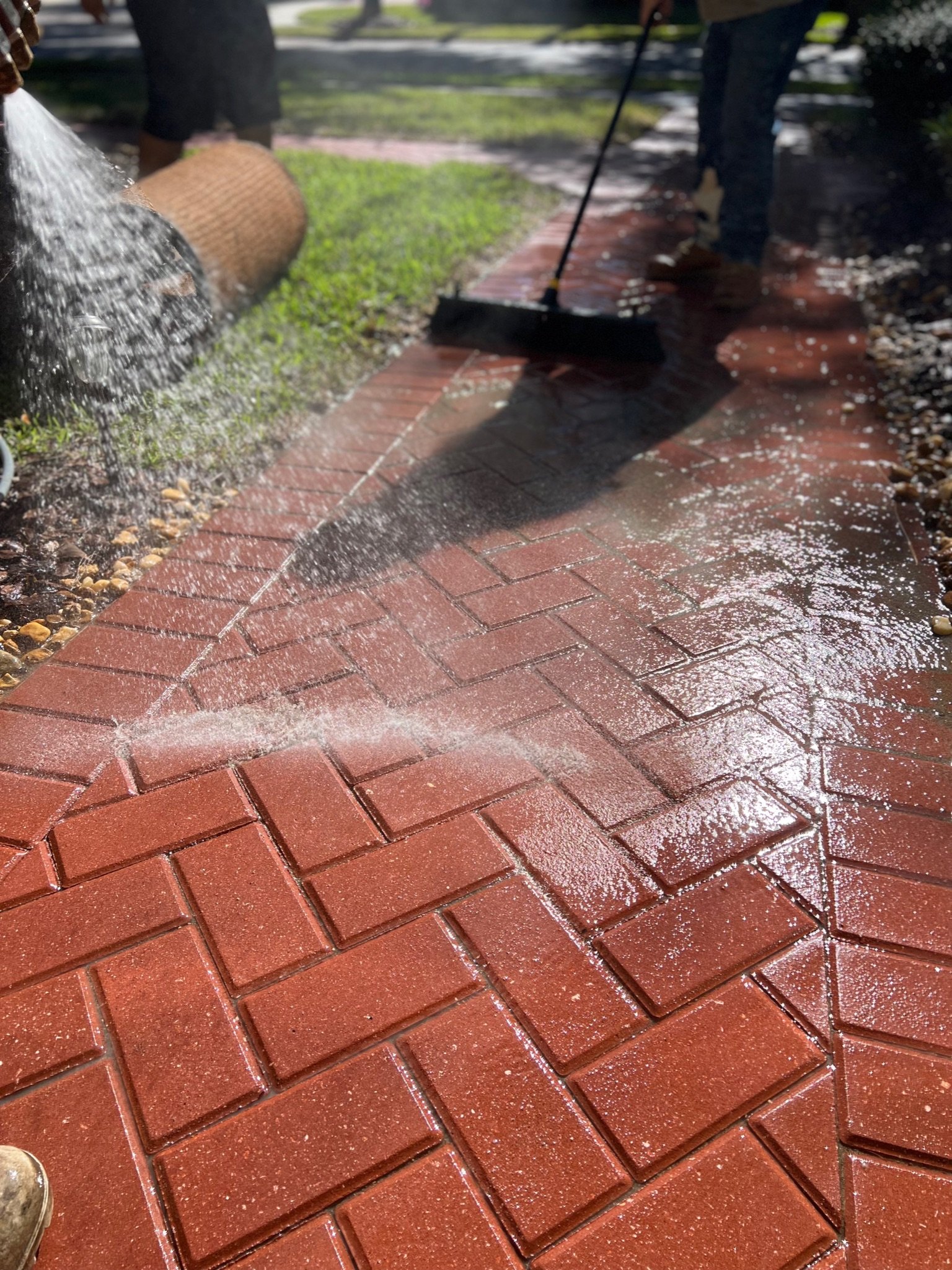
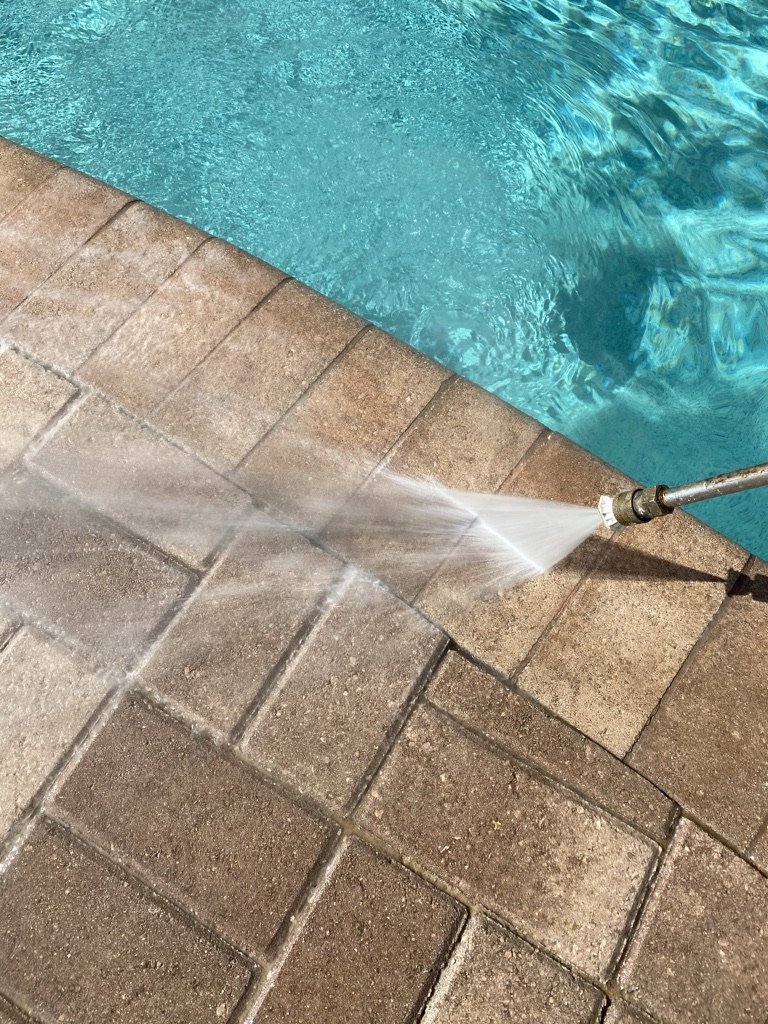
Sealed pavers respond well to a low-pressure, wide-fan rinse. Keep the tip a couple of feet off the surface, keep it moving, and let water flow do the work rather than raw pressure. Done this way, a wash lifts dirt and organic film without touching the sealer or the joints underneath.
What actually damages a sealed surface
Trouble starts when a stubborn spot tempts you to switch to a narrow, zero-degree nozzle and get in close. That concentrated jet will cut right through the sealer, etch the paver face, and blast the joint sand out of the joints — turning a quick clean into a resealing and re-sanding job. If you find yourself reaching for more pressure, that’s the sign to back off, not lean in.
“A pressure washer is a maintenance tool on sealed pavers — not a weapon. Wide fan, low pressure, keep moving.”
Use a surface cleaner if you have one
The safest way to wash a large sealed area is a surface cleaner — the flat, hooded attachment that spreads the water evenly under a spinning bar. It cleans uniformly at lower pressure, so there are no wand streaks and no risk of digging into one spot. It’s exactly what the pros use, and it’s gentle on the finish.
Don’t wash a fresh seal — and watch what the wash tells you
Give a new seal its full cure (foot traffic after about 4 hours, but let the finish harden for a few days) before any pressure washing. And pay attention while you clean: if water is soaking in and darkening the pavers rather than beading up, the sealer has worn thin, and it’s time to plan a reseal rather than scrub harder.
Can you pressure wash sealed pavers?
Yes, gently. Use low pressure, a wide fan tip, and keep the wand back and moving, or use a surface cleaner. Avoid narrow high-PSI nozzles, which strip the sealer and blast out joint sand, and don't wash a freshly sealed surface until it has cured.
Will pressure washing remove paver sealer?
It can if you use too much pressure. A narrow high-PSI nozzle up close cuts through the sealer and gouges the paver. Low pressure with a wide fan or a surface cleaner cleans the surface without removing the seal.
What PSI is safe for sealed pavers?
There is no single number, but the safe approach is low pressure with a wide fan tip kept well back from the surface, or a surface cleaner that spreads the pressure evenly. Flow and technique matter more than a high PSI figure.
Sources: CMHA Tech Note PAV-TEC-006 (operation & maintenance); ICT Ure-Seal H2O product data (Innovative Concrete Technologies).
Want it done right the first time? Kingdom Elite Services cleans and restores pavers across Tampa Bay — see paver cleaning & pressure washing in Tampa Bay.