Maintenance · Florida
The Water-Drop Test: Do My Pavers Need Resealing?
To tell if your pavers need resealing, do the water-drop test: splash a little water on them. If it beads up, the seal is still working. If it soaks in and darkens the pavers, the seal has worn thin and it’s time to reseal. In Florida, plan on every 2–3 years — sooner in full sun or near saltwater.
You don’t need a technician or a moisture meter to know when your pavers are due. There’s a ten-second test you can do with a cup of water, and it’s the same thing the pros look for.
How to do the water-drop test
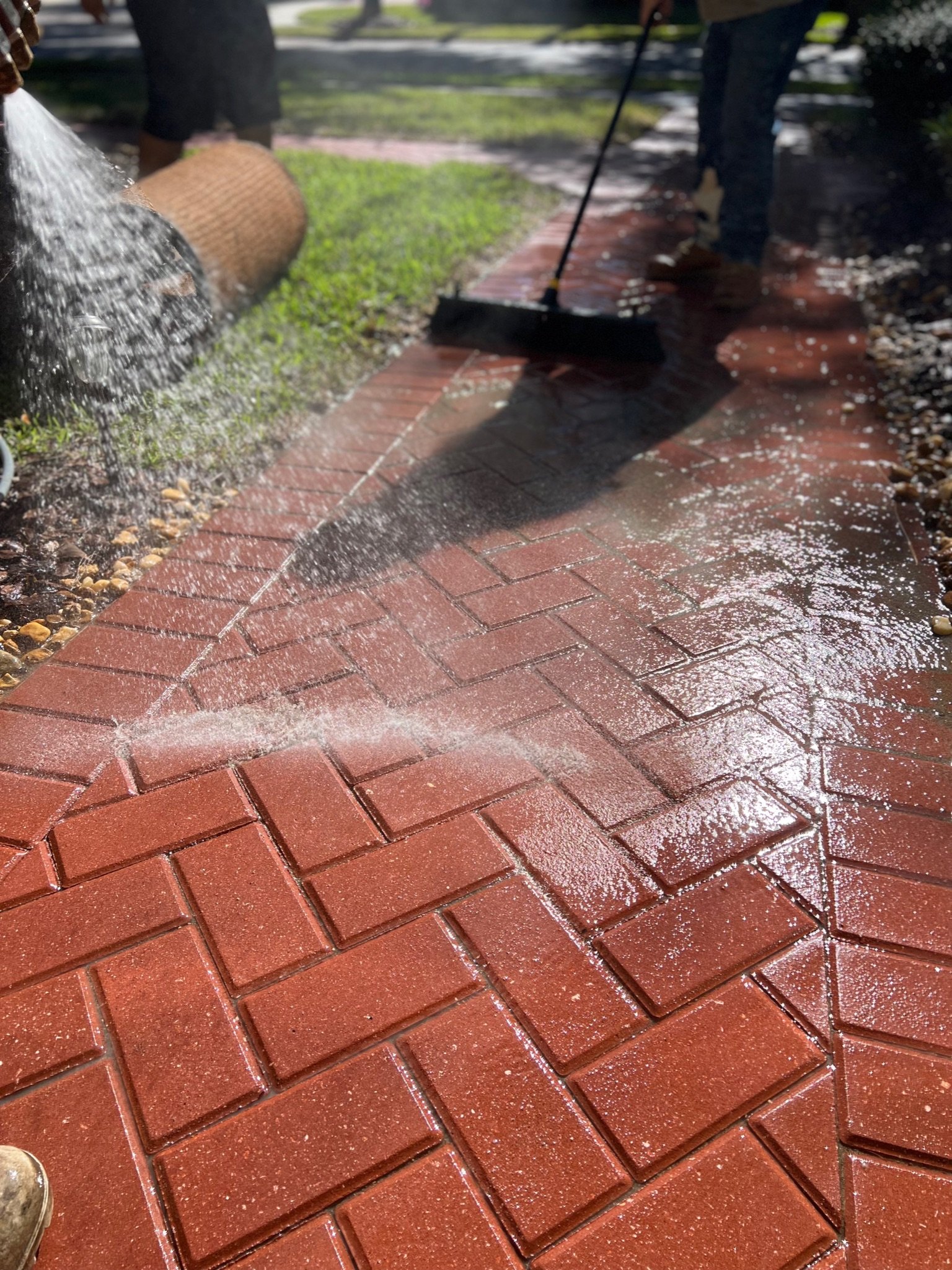
Pour or splash a small amount of water onto a few different areas of your pavers — and be sure to include high-traffic spots like the middle of the driveway or the walk-up to the door, because those wear first. Watch what the water does over the next few seconds.
Reading the result
Water beads up or sits on top: the sealer is intact and doing its job — no reseal needed yet. Water soaks in and the paver darkens: the seal has worn away in that area and the paver is now absorbing moisture (and stains) again. If most of your test spots soak in, the surface is due for a fresh coat.
“If the water darkens the paver instead of beading, the sealer is already gone — the paver just told you.”
Other signs it’s time
The water test is the clearest signal, but a few others back it up: the color looks faded or dull instead of rich, the pavers are staining more easily than they used to, the joint sand is sitting low, or you’re starting to see the black and green of organic growth returning. Any of these alongside a failed water test means it’s reseal season.
Why Florida runs 2–3 years
Our UV, heat, humidity, and rain wear a seal faster than milder climates, which is why the Florida reseal window is every 2–3 years — toward the shorter end for a full-sun driveway or a pool deck near saltwater, longer for a shaded patio. Resealing on schedule keeps each visit a quick refresh; letting the seal fail completely lets dirt, stains, and moisture back into bare pavers and turns the next job into a full restoration.
How do I know if my pavers need resealing?
Do the water-drop test: splash water on the pavers in a few spots. If it beads up, the seal is intact. If it soaks in and darkens the surface, the seal has worn thin and it's time to reseal. Fading color and easier staining are supporting signs.
How often should pavers be resealed in Florida?
Every 2 to 3 years in Florida — toward the shorter end for full-sun driveways and pool decks near saltwater, longer for shaded patios. Our UV, heat, and humidity wear a seal faster than milder climates.
What is the water-drop test for pavers?
A simple check: pour water on the pavers and watch it. If it beads on top, the sealer is still working. If it absorbs and darkens the paver, the sealer has worn away and the surface should be resealed.
Sources: CMHA Tech Note PAV-TEC-006 (operation & maintenance); ICT Ure-Seal H2O product data (Innovative Concrete Technologies).
Want it done right the first time? Kingdom Elite Services cleans, re-sands and seals pavers across Tampa Bay — see paver sealing in Tampa Bay.