Restoration · Florida
Why Weeds Grow Between Pavers (and How to Stop Them)
Weeds grow between pavers because windblown seeds and debris collect in the joints from above — not because they push up from the base. The fix is a full, tight joint: clean out the old material, refill with properly compacted joint sand, and seal. That locks the joints and denies seeds the loose, damp foothold they need.
It’s one of the most common questions we get: “How are weeds growing through solid pavers?” The answer surprises people — and it’s good news, because it means the problem is fixable from the surface.
The myth: weeds don’t come from below
A properly built paver surface sits on a compacted base, usually over a layer of landscape fabric. Weeds almost never punch up through that. What actually happens is this: seeds and fine organic dust blow across your patio or driveway and settle into the joints. Where a joint is low, open, or washed out, that debris packs in, holds moisture, and gives seeds a perfect little planter to sprout in. The weeds are growing in the joints, not through the pavers.
Why some joints grow weeds and others don’t
The culprit is almost always empty or eroded joint sand. Over years of rain and pressure washing, joint sand washes down and out, leaving low, open gaps that collect debris and stay damp. Add Florida shade and humidity and you have ideal germinating conditions. Full, firm joints simply don’t offer that foothold.
“A weed in a paver joint isn’t a base problem — it’s an empty-joint problem. Fill the joint, lock it, and the weeds have nowhere to root.”
The real fix: re-sand and seal
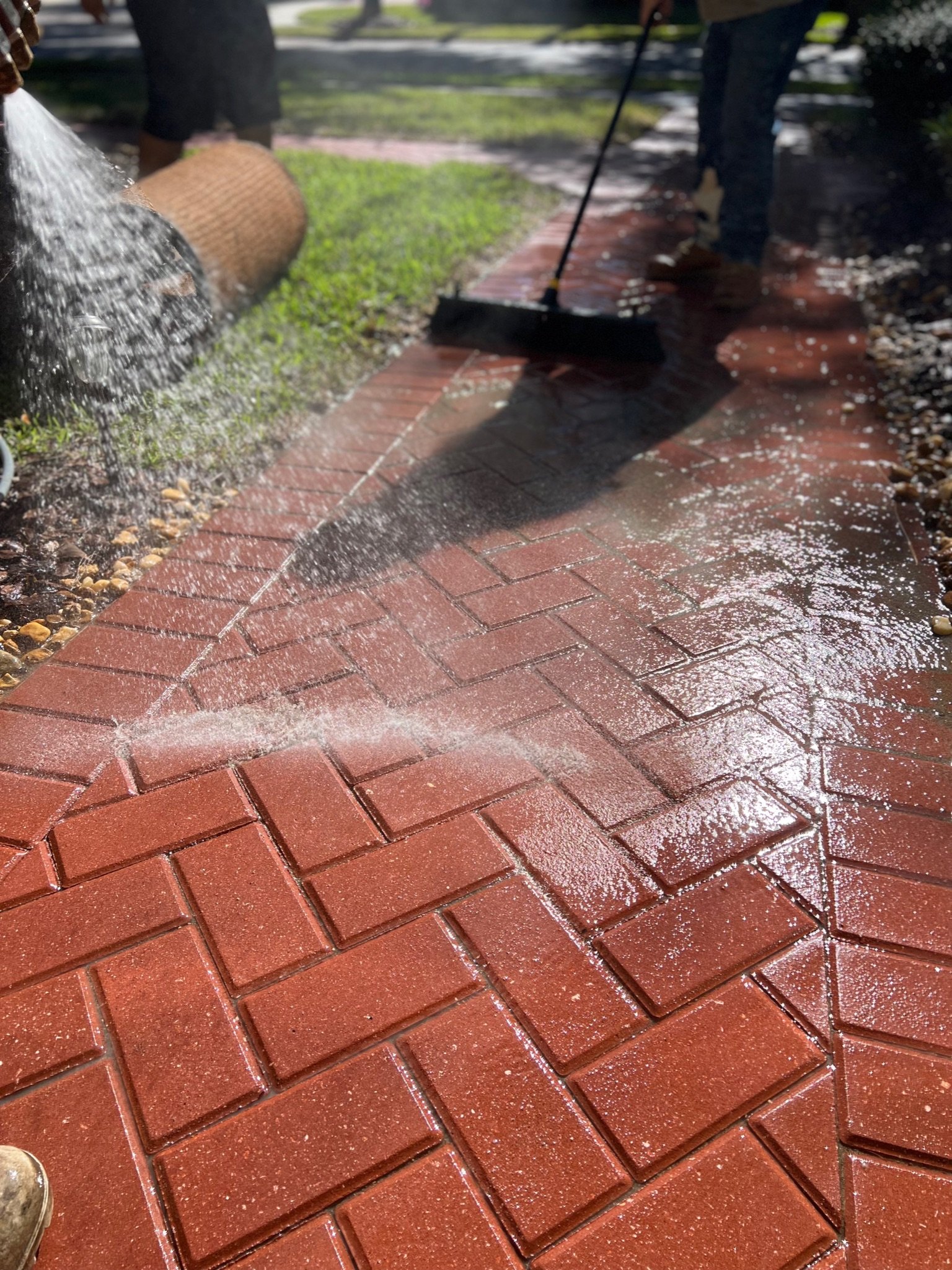
Stopping weeds for the long term means rebuilding the joint, not just spraying what’s there. The process is: pull existing weeds and treat any organic growth, clean the joints, then refill with fresh ASTM C-144 joint sand. Kingdom Elite installs that sand with a wet-sand, hydro-compaction method — flooding the joints with a wide, low-pressure spray so the angular sand locks together into a fuller, harder joint than a dry sweep ever produces. Finally, a flood-coat sealer binds the sand in place and closes the surface.
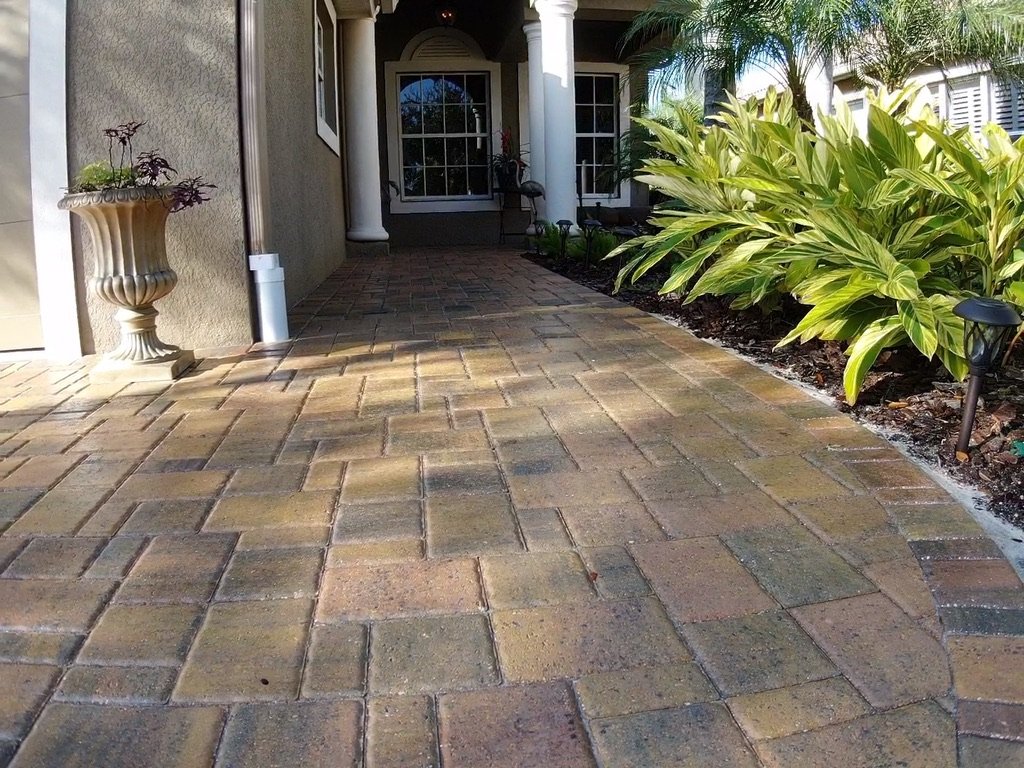
The result is a joint that stays full and firm, sheds water, and gives windblown seeds nothing loose to sprout in. Polymeric sand, which hardens when activated, is another route to the same goal — a locked joint.
Keeping them gone
Once the joints are full, sealed, and firm, upkeep is easy: blow or sweep off leaves and organic debris before it packs into the joints, keep sprinklers from constantly soaking the pavers, and reseal on schedule — every 2–3 years in Florida — to keep the joints locked. Catch a stray weed early and it pulls right out, because it never had real roots to begin with.
Do weeds grow up from under pavers?
Almost never — the base is compacted and usually has fabric. Seeds blow in from above and germinate in the loose sand and debris that collects in open joints.
Does sealing pavers stop weeds?
Yes, in combination with full joints. Refilled, compacted, sealed joints bind the sand and close the surface, so seeds have no loose, damp foothold.
What’s the best sand to stop weeds between pavers?
A full, firmly compacted joint is what counts. We use ASTM C-144 sand wet-sanded and hydro-compacted, then sealed; polymeric sand is another way to harden the joint.
Sources: CMHA Tech Note PAV-TEC-005 (cleaning, sealing & joint-sand stabilization); CMHA Tech Note PAV-TEC-006 (operation & maintenance); SEK-Surebond ASTM C-144 joint sand (sold through Trident).
Want it done right the first time? Kingdom Elite Services re-sands and re-levels pavers across Tampa Bay — see paver repair in Tampa Bay.
Done pulling weeds every month? Get a free on-site estimate →