Cleaning · Florida
Efflorescence: How to Remove the White Haze on Pavers
Efflorescence is a chalky white haze that appears when natural salts inside concrete pavers migrate to the surface and dry there. It’s harmless but unsightly, most common on newer pavers, and is removed with an acid-free efflorescence remover — never muriatic acid. Sealing after removal helps keep it from returning.
If your pavers look like someone dusted them with a thin layer of chalk or powder, that’s efflorescence — and it’s one of the most misunderstood things in paver care. It isn’t mold, it isn’t a stain, and it isn’t a sign your pavers are failing.
What efflorescence actually is
Concrete pavers naturally contain soluble mineral salts. When moisture moves up through the paver and evaporates at the surface, it leaves those salts behind as a white, powdery film. That’s efflorescence. It’s purely cosmetic — it doesn’t weaken the paver — but it dulls the color and looks like a haze, especially on darker pavers.
Why new pavers get it the most
Fresh pavers are still curing and hold the most free salts and moisture, so efflorescence is most common in the first several months after installation. This is one reason new pavers should cure until their efflorescence has run its course before sealing — sealing too soon can trap that moisture and the blooming salts underneath. On established pavers, efflorescence usually diminishes over time as the salts deplete.
How to remove it — and what to avoid
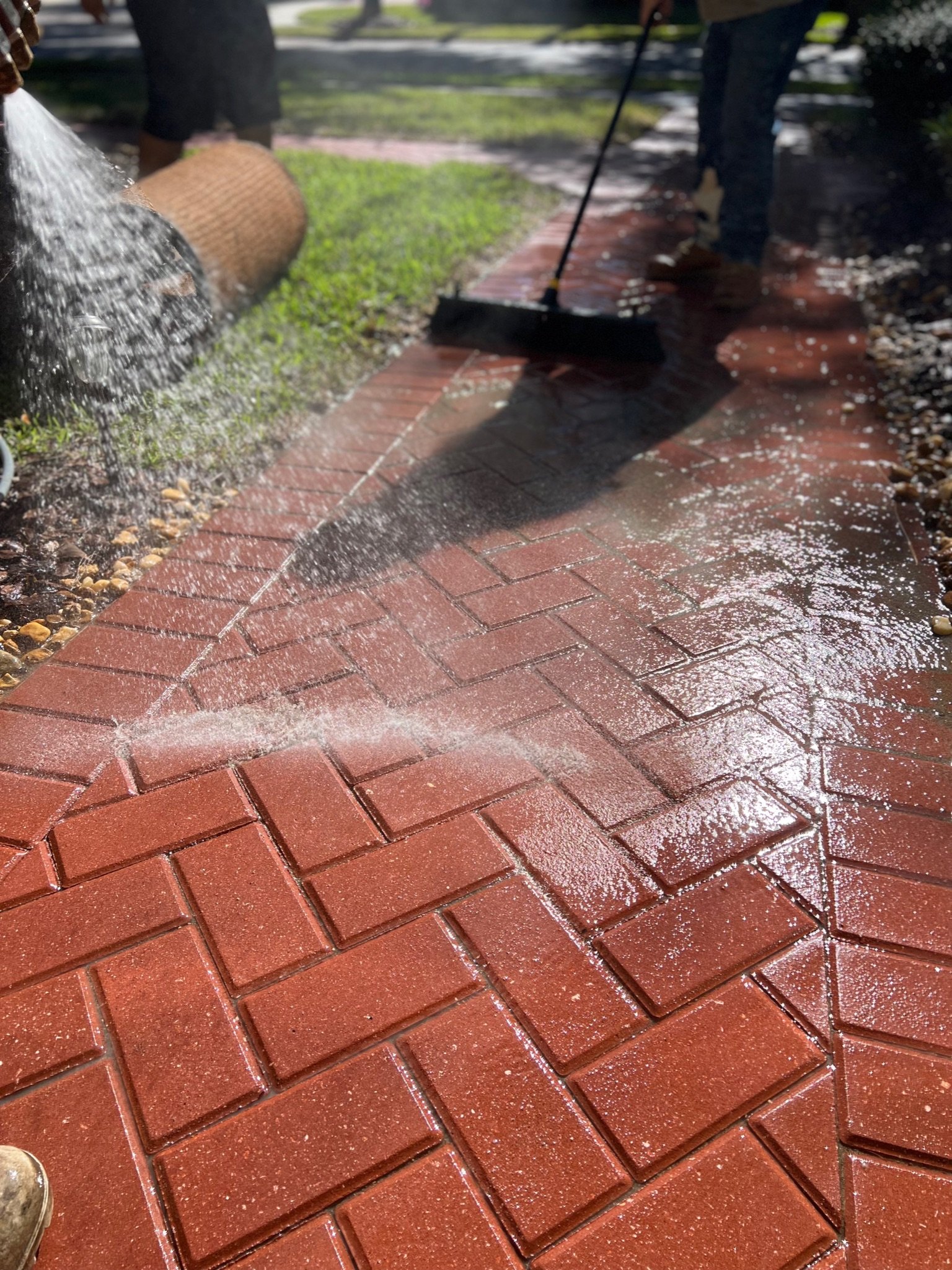
The correct removal is an acid-free efflorescence remover (Kingdom Elite uses Trident White Water). It’s applied to the affected area, allowed to dwell so it dissolves the salt deposit, then agitated and rinsed. Heavy blooms sometimes need a second pass.
What you should not do is reach for muriatic or other strong acids. Acid can etch and discolor the paver surface, is hazardous to handle, and can actually pull more salts up as it reacts — leaving the pavers looking worse than when you started.
“Efflorescence is a moisture problem wearing a costume. Remove the salts, then control the water with a breathable seal.”
Don’t seal over it
Sealing pavers that still have efflorescence locks the white haze in under the finish, where it’s permanent. The salts must be removed and the surface fully dry first. Just as important, the sealer itself should be water-based and breathable so any remaining internal moisture can still escape — a non-breathable solvent sealer can trap moisture in Florida’s humidity and cause its own cloudy haze.
Will it come back?
For most pavers, efflorescence lessens naturally as the free salts run out. Removing it and then sealing with a breathable sealer limits how much moisture moves through the paver, which reduces future blooming. Good drainage and keeping sprinklers off the pavers help too.
Is efflorescence bad for pavers?
No — it’s a harmless cosmetic salt deposit, not damage or mold. It just looks like a chalky white haze and usually needs removing before sealing.
Can I use muriatic acid to remove efflorescence?
It’s not recommended. Strong acids can etch and discolor pavers, are hazardous, and can draw more salts up. An acid-free remover is safer and works better.
Will sealing stop efflorescence?
Sealing after removal reduces moisture movement and future deposits — as long as it’s a breathable, water-based sealer so trapped moisture can still escape.
Sources: CMHA Tech Note PAV-TEC-005 (cleaning, sealing & joint-sand stabilization); ICT Ure-Seal H2O product data (Innovative Concrete Technologies).
Want it done right the first time? Kingdom Elite Services cleans and restores pavers across Tampa Bay — see paver cleaning & pressure washing in Tampa Bay.
Got the white haze? Get a free on-site estimate →