Restoration · Florida
Re-Sanding Paver Joints: Polymeric vs. ASTM C-144
Paver joints lose sand over time to rain, wind, and pressure washing — leading to shifting, weeds, and standing water. Re-sanding refills them, either with polymeric sand (which hardens when watered) or, as Kingdom Elite does, ASTM C-144 sand installed by wet-sand hydro-compaction and locked with a flood-coat sealer. A full, firm, sealed joint is what keeps pavers stable and low-maintenance.
Joint sand is the least glamorous part of a paver installation and the most important. The pavers don’t work as individual stones — they work as an interlocking system, and that system only holds together when the joints are full.
Why joint sand matters more than it looks
Full joints are what let pavers share load and resist movement. The sand wedges each paver against its neighbors so nothing rocks, tips, or spreads. It also blocks the two things that ruin a paver surface: weeds, which root in open joints, and water, which erodes the base when it runs down empty gaps. Lose the sand and you get shifting pavers, weeds, ant hills, and puddles — in that order.
Signs your pavers need re-sanding
You’re due for re-sanding if the sand sits noticeably below the top of the pavers, you can see open gaps, pavers rock or shift underfoot, weeds or ants appear in the joints, or water pools on the surface after rain. Years of Florida rain and over-aggressive pressure washing are the usual reasons the sand is gone.
Option 1: Polymeric sand
Polymeric sand is joint sand blended with binders that harden when activated with water. Swept into the joints and watered per directions, it sets firm and resists washout and weeds. It works well — but it’s unforgiving: if it isn’t cleaned fully off the paver faces before activating, it can leave a haze, and a poor activation can leave the joint crumbly or cracked.
Option 2: ASTM C-144 + wet-sand hydro-compaction (our method)
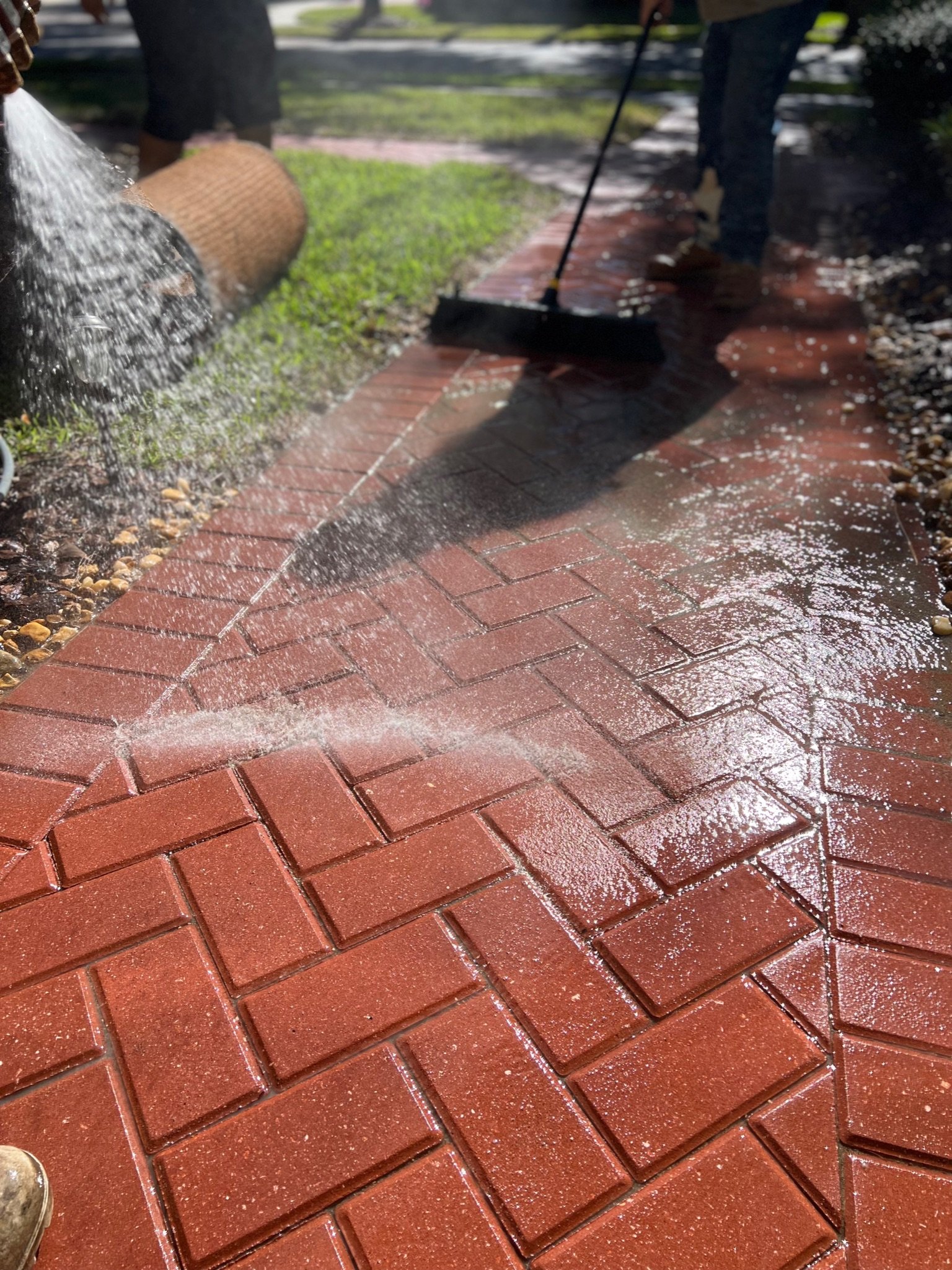
Kingdom Elite refills joints with ASTM C-144 mason’s sand — a fine, angular gradation that fills joints readily — and installs it with a wet-sand, hydro-compaction technique. Instead of a dry sweep, the joints are flooded with a wide, low-pressure spray of pure water. The water carries the angular grains deep and lets them lock together as they settle, producing a fuller, harder joint than dry sweeping can. A flood coat of sealer then binds the sand at the surface and closes the joint.
“Dry sand sits in the joint. Hydro-compacted sand locks in it. Water is what turns loose grains into a solid, sealed joint.”
Why we do it this way
The wet-sand method produces a denser, more consistent joint that resists washout and weeds, and pairing it with a bonding flood-coat sealer means the sand stays put instead of eroding out with the next storm. It gives the durability people want from polymeric sand without the hazing and cracking risks of a botched activation — and it’s done as part of the same clean-and-seal visit.
Keep the joints locked
However the joints are filled, the key to keeping them is the seal. Reseal every 2–3 years in Florida to keep the sand bound, and don’t blast the joints with high-PSI pressure washing — that’s what emptied them in the first place. Full joints, sealed and maintained, are what make a paver surface last decades instead of years.
How do I know if my pavers need re-sanding?
Look for sand sitting low in the joints, visible gaps, pavers that rock, weeds or ants, or water pooling after rain — any of those means the joints have lost sand.
Is polymeric sand better than regular sand?
Both can work. Polymeric hardens with water but is fussy to apply; we use ASTM C-144 wet-sanded, hydro-compacted, and sealed for a full, hard joint without the hazing or cracking risk.
Can I just add sand without sealing?
Loose sand washes and blows right back out. Compacting it and then sealing binds it in place so the joint stays full far longer — which is why re-sanding and sealing go together.
Sources: CMHA Tech Note PAV-TEC-005 (cleaning, sealing & joint-sand stabilization); SEK-Surebond ASTM C-144 joint sand (sold through Trident); ICT Ure-Seal H2O product data (Innovative Concrete Technologies).
Want it done right the first time? Kingdom Elite Services re-sands and re-levels pavers across Tampa Bay — see paver repair in Tampa Bay.
Joints washing out again? Get a free on-site estimate →