Cleaning · Florida
How to Remove Mold & Algae From Pavers in Florida
The black and green on Florida pavers is living mold and algae, thriving in shade and humidity. Remove it by treating the surface with a sodium-hypochlorite cleaner — not just pressure washing — then rinsing thoroughly and sealing the clean pavers. A proper seal is what keeps it from growing back.
In Florida, nothing ages a patio or pool deck faster than the creeping green-and-black film that shows up in the shady spots. It looks like a stain, but it’s alive — and that’s exactly why scrubbing and pressure washing alone never keep it away for long.
What that black and green stuff really is
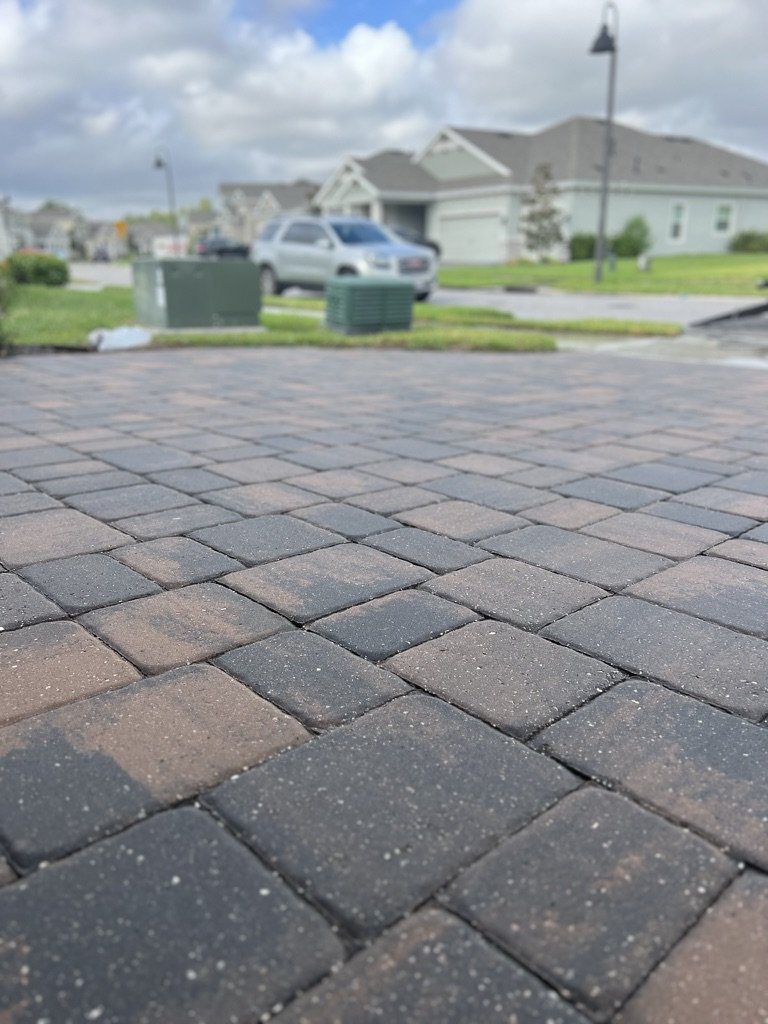
The discoloration is organic growth: algae (usually the green film), mold and mildew (the black and gray blotches), and sometimes lichen. All of it feeds on moisture, shade, and the fine organic dust that settles on pavers. Florida’s humidity, afternoon rain, and screened lanais create nearly perfect conditions, which is why north-facing and tree-shaded areas go first.
Why pressure washing alone doesn’t fix it
A pressure washer removes the growth you can see, but the spores and root structures live down in the pores of the paver and in the joint sand. Within a few weeks of a wash-only cleaning, the film is back. Worse, homeowners often crank the pressure to scrub it off and end up blasting the joint sand out — opening the joints to even more moisture and growth.
“Pressure washing treats the symptom. Killing the organism and sealing the surface treats the cause.”
How the pros remove it for good
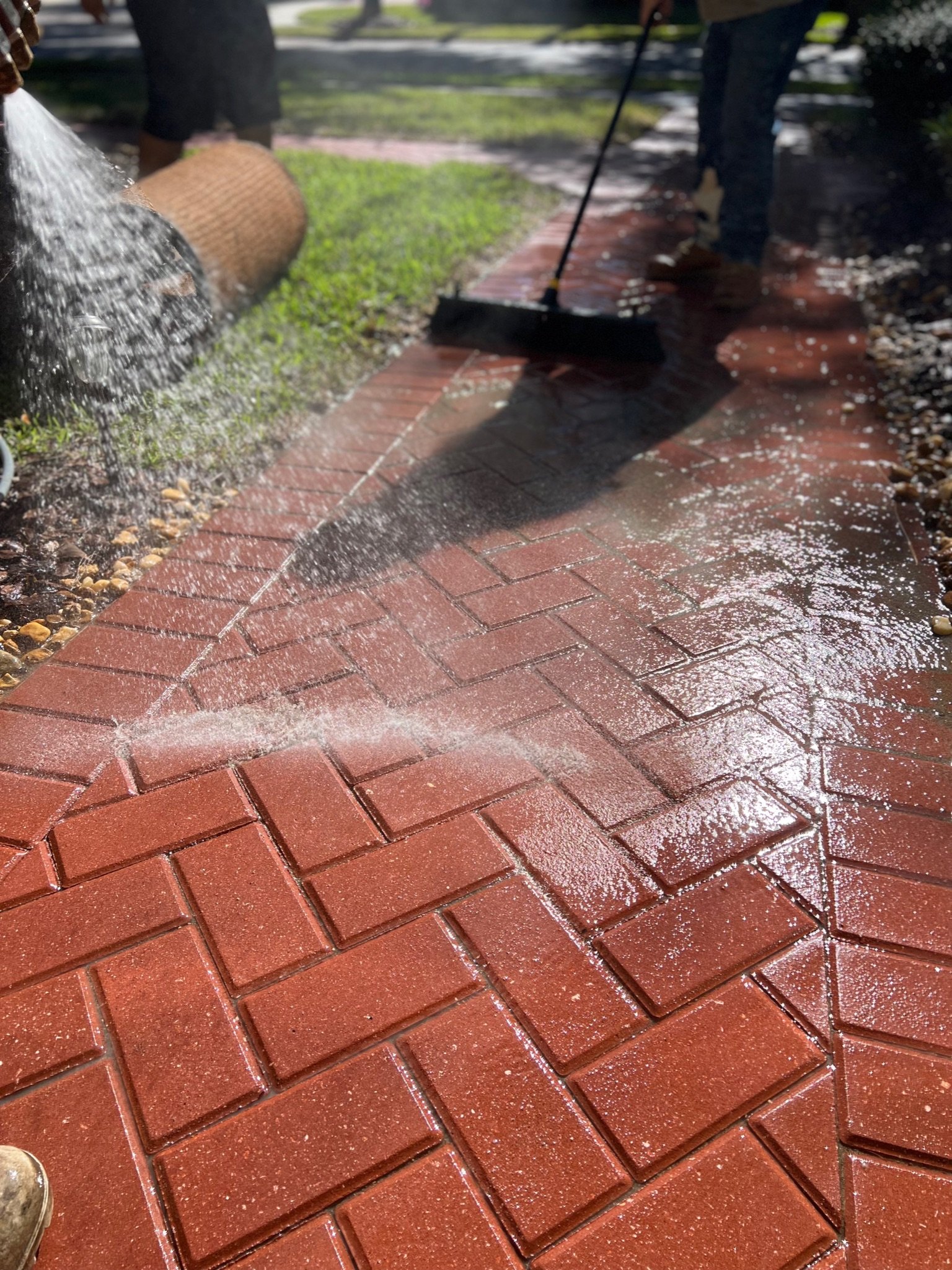
The reliable method is chemistry first, water second. A sodium-hypochlorite-based cleaner is applied and allowed to dwell so it actually kills the algae and mold at the root, then the surface is agitated and rinsed with high flow. Kingdom Elite runs a 5.5 GPM rig with a surface cleaner, so the treated growth rinses away evenly without gouging the pavers or stripping the joints. Acids are avoided — they don’t kill organics any better and can etch the paver.
Once the surface is clean, dry, and re-sanded, sealing closes the pores where spores take hold. That’s the step that turns a one-time cleaning into a lasting fix.
Keeping it from coming back
Seal the pavers, then help the surface stay dry and sunny: trim back overhanging branches and shrubs for airflow and light, keep sprinklers from constantly wetting the pavers, and clear leaves and organic debris that feed new growth. Sealed pavers also rinse clean far more easily, so routine maintenance takes minutes instead of a weekend.
Will pressure washing remove algae permanently?
No — it removes what you can see but leaves spores and roots in the pores and joints, so it regrows within weeks. Treating the organism and then sealing is what keeps it gone.
Does sealing pavers prevent mold and algae?
Sealing greatly slows regrowth by closing the pores and making the surface easy to rinse, but it isn’t a pesticide — periodic cleaning and good drainage still help.
Is bleach safe on pavers?
Sodium hypochlorite is the standard treatment, but it needs the right concentration, thorough rinsing, and care around plants and metal. Pros use controlled solutions rather than straight household bleach.
Sources: CMHA Tech Note PAV-TEC-005 (cleaning, sealing & joint-sand stabilization); ICT Ure-Seal H2O product data (Innovative Concrete Technologies).
Want it done right the first time? Kingdom Elite Services cleans and restores pavers across Tampa Bay — see paver cleaning & pressure washing in Tampa Bay.
Tired of the green coming back? Get a free on-site estimate →