Problems & Fixes · Florida
When You Should NOT Seal Your Pavers
Don’t seal pavers when they’re too new (let new pavers cure and their efflorescence run its course first), when the surface is damp or rain is coming, when efflorescence, dirt, or mold hasn’t been removed, or when a failing old sealer is still on them (strip it first). Sealing at the wrong time causes haze, peeling, and locked-in problems. Sealing is worth it — but timing and prep decide whether it helps or hurts.
We seal pavers for a living, and we’ll still tell you: there are days you shouldn’t seal. Nearly every sealing failure we’re called to fix traces back to sealing at the wrong moment. Knowing when not to is half of doing it right.
Not when the pavers are brand new
Fresh concrete pavers are still curing and pushing out moisture and efflorescence salts. Seal them too soon and you trap all of it under the film. Wait until the efflorescence has run its course and can be removed; there is no fixed number of days. (Newly installed natural stone is the exception — it can take a breathable penetrating sealer sooner.)
Not on a damp surface or before rain
Sealer needs a fully dry surface and a rain-free cure window of 24–48 hours. Seal a paver that’s still holding moisture, or right before a Florida downpour, and you’ll get haze. “Looks dry” isn’t dry — give it time after cleaning or rain.
Not over efflorescence, dirt, or mold
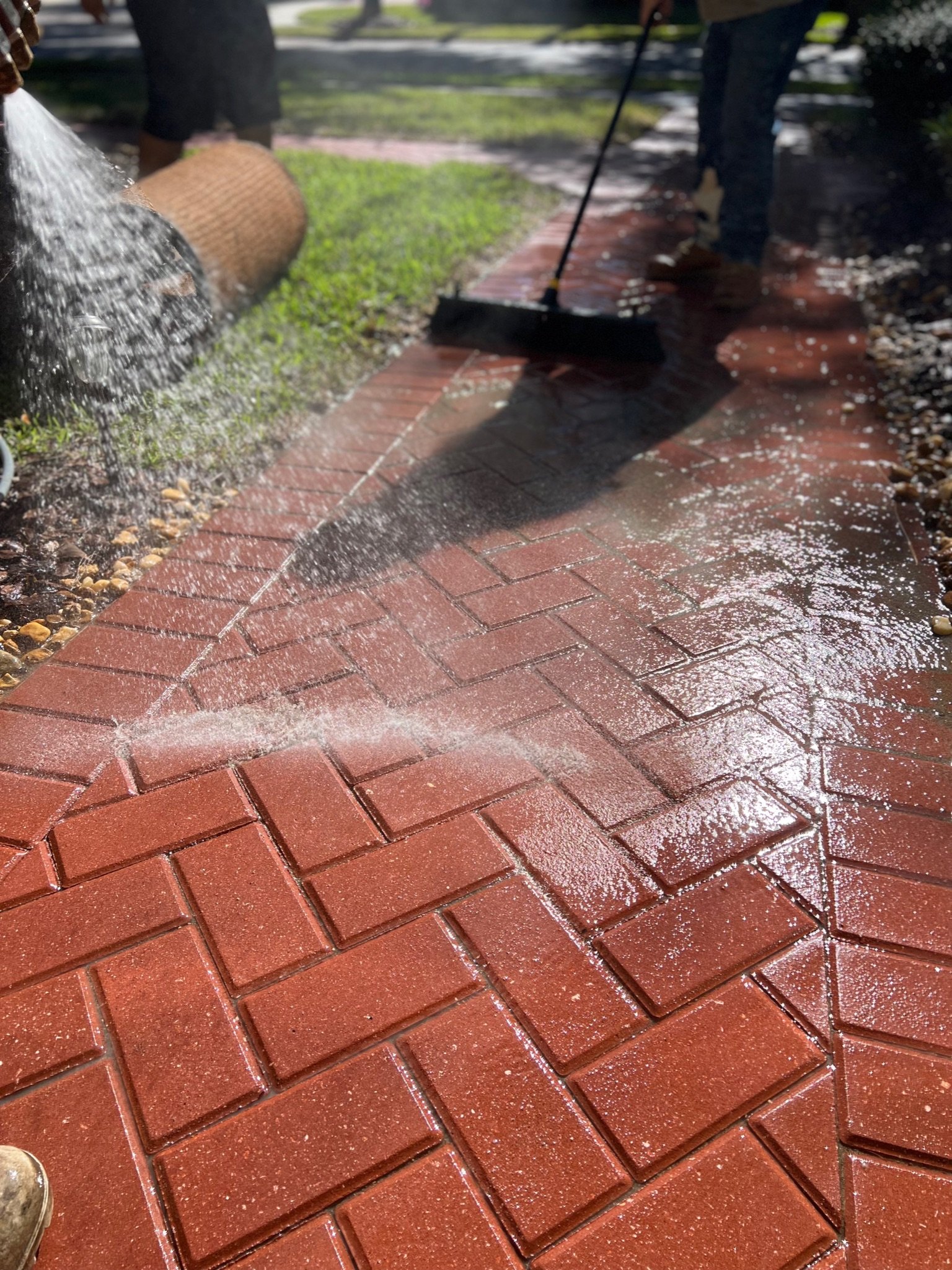
Whatever is on the paver gets sealed in. A film of efflorescence, a layer of dust, or living mold and algae all become permanent under the sealer — and they wreck both the look and the bond. Full cleaning, including acid-free efflorescence removal, comes first, every time.
“The best sealer in the world can’t fix bad timing. When conditions are wrong, waiting is the professional move.”
Not over a failing old sealer
If the pavers already carry an old, worn, or peeling sealer, don’t just coat over it — the new film will bond to the failing one and peel with it, and mixing incompatible sealer types makes it worse. The old sealer should be stripped first so the fresh coat bonds to the paver.
Not in extreme conditions
Skip sealing in the peak heat of a midsummer afternoon (the sealer flashes off too fast) or during a rare cold snap below the product’s minimum. Mild, dry conditions give the sealer the best chance to cure clear and bond well.
Sealing is still worth it — done right
None of this is an argument against sealing. Sealing protects color, blocks stains, locks joints, and makes maintenance easy — it’s well worth it. The point is that timing and prep are what separate a seal that helps from one that has to be stripped and redone. When the pavers are cured, clean, dry, and the forecast is clear, that’s the day.
Is it bad to seal pavers?
No — sealing protects color, blocks stains, locks joints, and makes maintenance easier. What causes problems is sealing at the wrong time or over the wrong surface. Done on cured, clean, dry pavers with a clear forecast, sealing is well worth it.
Should you seal pavers right after installation?
No. New concrete pavers should cure first and let their efflorescence run its course; it is then removed before sealing. Sealing too soon traps them under the film and causes haze. Newly installed natural stone can take a penetrating sealer sooner.
When should you not seal pavers?
Don't seal when pavers are brand new and uncured, when the surface is damp or rain is coming, when efflorescence, dirt, or mold hasn't been removed, when a failing old sealer is still on them, or in extreme heat or cold.
Sources: CMHA Tech Note PAV-TEC-005 (cleaning, sealing & joint-sand stabilization); ICT Ure-Seal H2O product data (Innovative Concrete Technologies).
Want it done right the first time? Kingdom Elite Services cleans, re-sands and seals pavers across Tampa Bay — see paver sealing in Tampa Bay.