Resealing · Florida · Edition No. 01
How Often Should You Reseal Pavers in Florida?
Short answer: In Florida, reseal your pavers every 2 to 3 years. Full-sun driveways wear fastest and land at the 2-year end; shaded or screened patios can stretch to 3 years or a little longer. Florida’s extreme UV, high humidity, and June–September rainy season break sealer down faster than in drier climates, so the 3–5 year schedules you’ll read on national sites don’t apply here.
The 2–3 year number isn’t a marketing round-off — it’s what Florida’s climate forces. Three things this state has more of than almost anywhere else decide the schedule: sun, rain, and humidity.
Why do Florida pavers need resealing more often?
Summer UV index readings of 10+ break down sealer resins; roughly 45–50 inches of annual rain — most of it in hard summer afternoon storms — scours the surface and washes out joint sand; and year-round humidity keeps mold and algae ready to recolonize the moment the protective layer thins. A sealer in Arizona is fighting one of those. Yours is fighting all three. For the full breakdown of what wears sealer out here and how each surface ages, see the pillar guide: How long does paver sealing last in Florida?
What’s the reseal schedule by surface?
| Surface | Reseal in Florida |
|---|---|
| Driveway (full sun, vehicles) | About every 2–3 years |
| Pool deck | Every 2–3 years |
| Open patio or walkway | Every 2–3 years |
| Screened / shaded lanai | About every 3 years, sometimes longer |
All of these sit inside the same 2–3 year cycle — sun exposure and traffic decide which end of it your surface lands on.
How do you know it’s time — even without a calendar?
- Rain soaks in instead of beading — the surest sign the sealer is spent.
- Color looks faded or chalky instead of rich.
- Mold, mildew, or algae are coming back in shady or damp spots.
- Joint sand is washing out during storms, with weeds or ants moving in.
“One sign means the clock is running. Two or more means you’re already due.”
When is the best time of year to reseal in Florida?
The dry season — roughly October through May — is the ideal window. Sealer needs a clean, dry surface and dry hours afterward to cure properly, and summer’s daily afternoon thunderstorms make that hard to hit reliably. (Cure time itself is quick: rain-safe about 2 hours after application, foot traffic about 4–6 hours, but keep vehicles off for 48–72 hours.) Sealing can absolutely be done in summer between weather systems; it just takes tighter scheduling around the forecast. If your pavers are due in July, don’t wait until October — a failing sealer is worse protection than a carefully timed summer reseal.
What if it’s been 5+ years (or you’ve never sealed)?
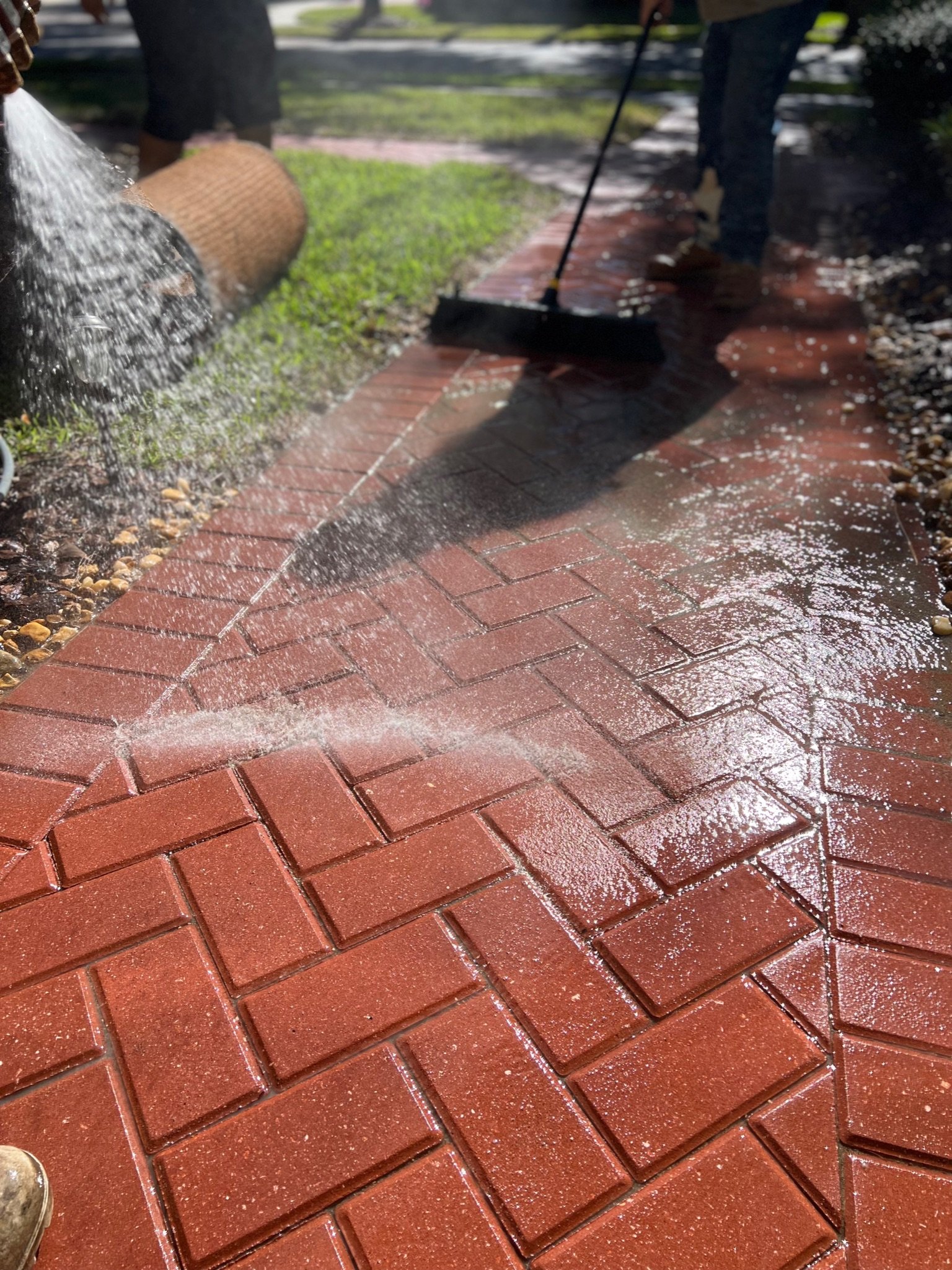
A routine reseal assumes the surface underneath is still in decent shape. After 5+ unprotected years, there’s usually more to fix first: deep staining, entrenched organics, empty joints, or an old sealer coat peeling unevenly that needs to be stripped before anything new goes on. That’s a restoration, not a reseal — still very doable, just a bigger first step. Kingdom Elite preps every job the same way: a 4-step process (pressure wash, treat organics and any staining, re-sand joints, then seal with Ure-Seal H2O, flood coat plus top coat). Most jobs take 1–2 days depending on size and condition. Staying on the 2–3 year cycle is what keeps you in cheap-maintenance territory instead of restoration territory.
Frequently asked questions
How often should you reseal pavers in Florida?
Every 2–3 years — sooner for high-sun driveways, longer for shaded patios. Florida’s UV, rain, and humidity wear sealer faster than drier climates.
Can you reseal pavers too often?
Over-applying sealer year after year can build up a thick film that traps moisture and turns hazy. Stick to the 2–3 year cycle and reseal when the surface shows it needs it, not annually.
Do new pavers need to be sealed right away?
There’s no one-size-fits-all wait time. New pavers should be sealed once their initial efflorescence — the natural white salt haze new pavers push to the surface — has run its course and been treated or cleaned off. Once sealed, they go onto the same 2–3 year Florida cycle.
How long does resealing take?
Most jobs take 1–2 days depending on size and condition — cleaning and re-sanding happen first, then the sealer goes down. After sealing, the sealer is rain-safe in about 2 hours and ready for foot traffic in about 4–6 hours; keep vehicles off for 48–72 hours.
Sources: CMHA Tech Note PAV-TEC-006 (operation & maintenance); ICT Ure-Seal H2O product data (Innovative Concrete Technologies).
Want it done right the first time? Kingdom Elite Services cleans, re-sands and seals pavers across Tampa Bay — see paver sealing in Tampa Bay.