Finishes & Products · Florida
Paver Sealer Types Compared: Acrylic, Urethane & Penetrating
Paver sealers come in three main types: acrylic (a common film sealer — affordable but less durable), urethane (a tougher, longer-lasting, non-yellowing film — Kingdom Elite uses a water-based urethane, Ure-Seal H2O), and penetrating (soaks in with no film or color change, best for natural stone). Cutting across all three is water-based vs. solvent — in Florida’s humidity, breathable water-based wins.
“Paver sealer” isn’t one product — it’s a category with real differences in durability, look, and how it holds up to Florida. Here’s the plain-language breakdown of what’s actually in the bucket.
Acrylic (film-forming)
Acrylics are the most common paver sealers — affordable, easy to find, and good at enhancing color. The catch is durability: acrylic films are softer, wear faster, and cheaper low-solids versions can yellow or haze and are prone to hot-tire pickup. Quality varies enormously with the solids content, which is why two “acrylic” sealers can perform nothing alike.
Urethane (film-forming)
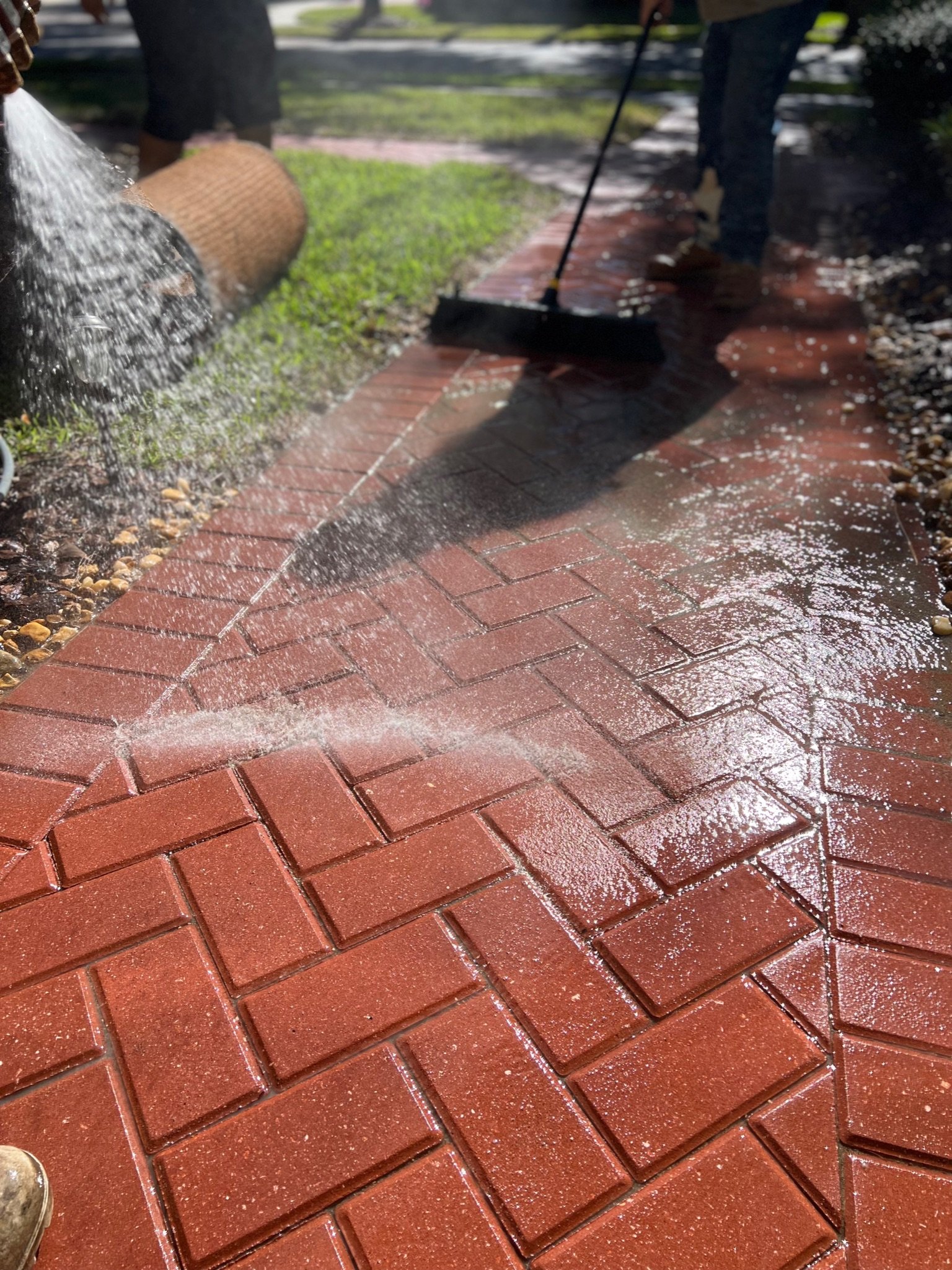
Urethane sealers form a much tougher, harder film with better resistance to abrasion, chemicals, and UV — and quality ones don’t yellow. This is the premium film category. Kingdom Elite seals with ICT Ure-Seal H2O, a two-part water-based urethane at roughly 45% solids: the durability and color of a top film sealer, but breathable and non-yellowing for our climate.
Penetrating (impregnating)
Penetrating sealers work differently — instead of a surface film, they soak in and protect from within, leaving no shine and no color change. They’re breathable and keep a natural, non-slick surface, which makes them the right choice for travertine and natural stone (we use ICT’s Stone Show H2O Invisible). They don’t give a wet-look pop, but they can’t peel or hot-tire either.
“Acrylic is the budget film, urethane is the durable film, penetrating is the invisible protector. In Florida, whichever you pick should be water-based.”
The water-based vs. solvent axis
Cutting across all three types is the carrier: water or solvent. Water-based sealers are breathable and low-odor — the safer choice in Florida’s humidity, where a non-breathable solvent film can trap moisture and haze. It’s why our film and penetrating sealers are both water-based.
Matching the type to the job
For concrete pavers where you want durability plus an enhanced look, a high-solids water-based urethane is the standout. For travertine and natural stone, a penetrating invisible sealer protects without changing the stone. A budget acrylic can work on small, low-traffic areas, but expect a shorter life — especially under a Florida sun.
What are the different types of paver sealer?
Three main types: acrylic (a common, affordable film sealer that's less durable), urethane (a tougher, longer-lasting, non-yellowing film), and penetrating (soaks in with no film or color change, best for natural stone). Each also comes water-based or solvent-based.
Which type of paver sealer lasts longest?
A high-solids urethane film generally lasts longest on concrete pavers, thanks to its harder, more UV- and chemical-resistant film. On natural stone, a quality penetrating sealer is very durable because it can't peel or hot-tire. Low-solids acrylics wear the fastest.
Is urethane or acrylic paver sealer better?
Urethane is more durable — harder, more resistant to UV, chemicals, and hot-tire pickup, and it doesn't yellow. Acrylic is cheaper and easier to find but softer and shorter-lived. For a lasting seal in Florida, a water-based urethane is the stronger choice.
Sources: ICT Ure-Seal H2O product data (Innovative Concrete Technologies); ICT Stone Show H2O Invisible product data; CMHA Tech Note PAV-TEC-005 (cleaning, sealing & joint-sand stabilization).
Want it done right the first time? Kingdom Elite Services cleans, re-sands and seals pavers across Tampa Bay — see paver sealing in Tampa Bay.